
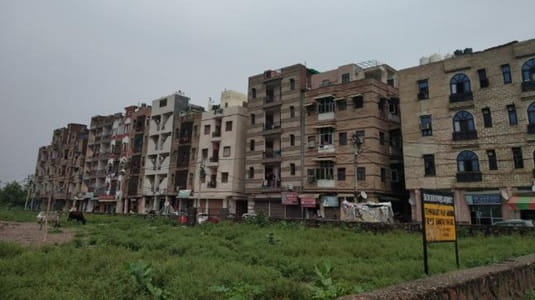
Gandhi Vihar Delhi is a residential locality in North Delhi that shares its neighbourhood with Nirankari Colony, Mukherjee Nagar, and Bhai Parmanand Colony — a combination that places it at the edge of one of Delhi’s most educationally significant zones and within practical reach of the Yellow Line metro and North Delhi’s principal railway stations. PIN code 110009 (shared with the Nirankari Colony and Mukherjee Nagar zone, with Gandhi Vihar Wazirabad forming the northern extension). The locality has 10+ properties available to buy, residents rate it 4.2 out of 5 for connectivity and 3.8 for safety.
What defines Gandhi Vihar’s functional identity more than any physical attribute is its proximity to Mukherjee Nagar — India’s most concentrated hub for UPSC and state public service examination coaching. The coaching centre ecosystem of Mukherjee Nagar generates a student rental economy that spills into Gandhi Vihar’s residential lanes, keeping demand for budget single rooms and shared accommodations consistently high across all economic cycles.
| Feature | Details |
| Location | North Delhi (Mukherjee Nagar-Nirankari zone) |
| PIN Code | 110009 / 110042 |
| Nearest Metro | GTB Nagar – Yellow Line |
| Additional Metro | Model Town – Yellow Line; Azadpur – Pink Line + Yellow Line interchange |
| Railway Stations | Delhi Azadpur Railway Station (~5 km); Adarsh Nagar Railway Station (~7 km) |
| Key Roads | GT Karnal Road; Dr KB Hegdewar Marg; Outer Ring Road |
| Airport Distance | IGI Airport – approx. 28 km via Mahatma Gandhi Road |
| Employment Hub | Netaji Subhash Place – approx. 11 km via Dr KB Hegdewar Marg |
| Property Type | Builder floors and independent houses |
| Key Colleges | Delhi University Enquiry Section (DU North Campus adjacency) |
| Key Hospitals | Kaya Kalp Hospital; Nulife Hospital; Vallabhbhai Patel Chest Institute (VPCI); Sant Nirankari Charitable Hospital |
| Key Shopping | Patel Chest; Kamla Market; Aggarwal Plaza; DT City Centre (~within zone) |
| Resident Rating | 4.2/5 connectivity; 3.8/5 safety |
Gandhi Vihar Delhi Connectivity – Yellow Line Metro, Azadpur Interchange, and Roads
GTB Nagar metro station on the Yellow Line is Gandhi Vihar’s primary transit anchor. The Yellow Line from GTB Nagar connects northward through Azadpur, Adarsh Nagar, Jahangirpuri, and Samaypur Badli in North Delhi, and southward through Civil Lines, Kashmere Gate, Chandni Chowk, New Delhi, Rajiv Chowk, and the full spine of Central and South Delhi toward AIIMS, Saket, and Huda City Centre in Gurugram. This single corridor places Gandhi Vihar residents within a direct metro connection to virtually every major employment zone in Delhi without requiring a line change.
Model Town metro station on the Yellow Line is an additional option for residents in the locality’s southern pockets. Azadpur metro station — the Pink Line and Yellow Line interchange at approximately 5 km — extends the connectivity to the Pink Line ring corridor and the Delhi Azadpur suburban railway station.
The Azadpur Railway Station on Delhi’s suburban ring line is approximately 5 km from Gandhi Vihar. Adarsh Nagar Railway Station, approximately 7 km away via Dr KB Hegdewar Marg, provides intercity connectivity. Majnu Ka Tila and Potala Ground are bus and auto exchange points within the locality’s immediate accessible zone — specific references in transit data as nodes from which Gandhi Vihar’s commuters organise their last-mile travel.
GT Karnal Road runs along the eastern boundary of the zone, connecting northward toward Sonipat and Haryana and southward toward the Ring Road junction. Dr KB Hegdewar Marg provides the internal connectivity toward Mukherjee Nagar and the Azadpur commercial area. The Azadpur Industrial Area at approximately 7 km is an employment zone whose workforce supports Gandhi Vihar’s rental market.
Gandhi Vihar Delhi Landmarks and Key Facilities
Mukherjee Nagar’s coaching hub is Gandhi Vihar’s single most significant adjacent ecosystem. Mukherjee Nagar houses India’s densest concentration of UPSC, SSC, state PCS, banking, and railway exam coaching institutes — an educational economy that supports thousands of students from across India living in the surrounding residential areas. Gandhi Vihar’s immediate proximity to this ecosystem creates consistent demand for budget accommodations, paying guest housing, and small flat rentals across all months of the year.
Patel Chest — more formally Vallabhbhai Patel Chest Institute — is a premier government respiratory diseases research and treatment hospital associated with Delhi University and located within the zone’s access area. The institute is nationally regarded for pulmonology and thoracic medicine research, giving Gandhi Vihar residents access to specialised government respiratory care without a long hospital journey.
Batra Cinema and Kamla Market provide entertainment and daily retail access. Aggarwal Plaza, Global Mall, Spark Mall, and DT City Centre are within 2 to 9 km for larger format retail. Sant Nirankari Bhavan — the headquarters of the Nirankari Mission, a spiritual movement with millions of followers — is within the adjacent Nirankari Colony and is a significant cultural and social institution for the zone. The locality’s neighbourhood character is shaped by the Nirankari community’s presence, which contributes to public spaces that are used for large spiritual gatherings and community events.
Angel’s Paradise, Woolar School, Usha Convent, Convergence School, and Savita School are the named schools within the 3 km radius cited in real estate data.
Schools, Colleges, and Healthcare in Gandhi Vihar
Delhi University’s North Campus is approximately 4 to 5 km from Gandhi Vihar — accessible by Yellow Line metro from GTB Nagar to Vishwavidyalaya station in one stop. The DU North Campus concentration of colleges — Hindu College, Kirori Mal, Daulat Ram, Miranda House, and others — means Gandhi Vihar sits at the outer edge of the student corridor that stretches from the University to Mukherjee Nagar’s coaching centre belt.
Sant Nirankari Charitable Hospital, Sant Parmanand Hospital, Adarsh Hospital, and Divini Hospital are within approximately 4 km for secondary care. Kaya Kalp Hospital and Nulife Hospital serve routine medicine and emergency needs more immediately within the zone. Vallabhbhai Patel Chest Institute (VPCI) at Delhi University provides specialised respiratory care for patients referred from across North Delhi. Hans Charitable Hospital and Durga Hospital extend the healthcare network further within the accessible zone.
Gandhi Vihar Delhi Real Estate – Property Rates and Market
Gandhi Vihar’s property market reflects its positioning between the student-economy of Mukherjee Nagar and the community-institutional character of Nirankari Colony. The broader Mukherjee Nagar zone averages ₹11,800 per sq ft, with Gandhi Vihar tracking below this given its residential character — primarily independent houses and builder floors in the mid-segment North Delhi band.
The 10+ properties available to buy at any given time reflect a modest owner-occupied community where transactions are driven by genuine residential need rather than speculative activity. The more active real estate category is rentals: the coaching hub spillover from Mukherjee Nagar generates demand for small rooms and 1 BHK configurations at prices well below South or West Delhi comparables. Students from Bihar, UP, Haryana, and Rajasthan who come to Mukherjee Nagar for competitive exam preparation find Gandhi Vihar an affordable residential alternative to the more expensive lanes directly adjacent to the coaching centres.
Sant Parmanand, Adarsh, Divini, and PJRM hospitals within 4 km, alongside the Yellow Line metro, give the locality a service density that supports the student-and-family mixed demographic.
Gandhi Vihar Delhi Environment – Nirankari Community Green, Air Quality, and Urban Character
Gandhi Vihar’s environmental profile is shaped primarily by its location between the GT Karnal Road industrial emissions corridor and the relatively open landscape of the Nirankari Colony’s community spaces and the Delhi University campus green. GT Karnal Road and Azadpur’s industrial area generate the zone’s primary pollution load; the DU North Campus’s green grounds and the Nirankari community’s maintained open spaces provide partial mitigation.
Peak-hour traffic congestion near the coaching institute cluster in adjacent Mukherjee Nagar extends into Gandhi Vihar’s connecting roads during morning and evening hours — a pattern residents flag alongside the broader North Delhi winter inversion season air quality challenges. Safety at 3.8 out of 5 reflects an urban area where routine community activity is safe but internal lane lighting is inconsistently maintained. The coaching economy generates positive commercial activity but also the transient population dynamics and late-evening commercial noise that any major student hub produces.
5 FAQs About Gandhi Vihar Delhi
Q1. Which metro station serves Gandhi Vihar?
GTB Nagar on the Yellow Line is the primary metro station. Model Town on the same line is a second option. Azadpur — the Pink Line and Yellow Line interchange at approximately 5 km — extends connectivity to the ring corridor and suburban railway.
Q2. Why is the Mukherjee Nagar proximity important for Gandhi Vihar?
Mukherjee Nagar is India’s most concentrated hub for UPSC, SSC, and civil services coaching — thousands of students from across India live in the surrounding zone. Gandhi Vihar’s adjacency creates consistent rental demand for affordable 1 BHK and shared accommodations, making it one of North Delhi’s most reliably occupied rental markets.
Q3. What is Vallabhbhai Patel Chest Institute?
VPCI is a government respiratory diseases research and treatment hospital associated with Delhi University, within the zone’s accessible area. It is a nationally regarded institution for pulmonology and thoracic medicine, providing specialised government healthcare for respiratory conditions within Gandhi Vihar’s effective medical catchment.
Q4. What are property rates near Gandhi Vihar?
The Mukherjee Nagar zone averages approximately ₹11,800 per sq ft. Gandhi Vihar as a sub-locality tracks below this given its independent-house and builder-floor character. The more active market is rentals — budget rooms and 1 BHK configurations driven by the coaching economy’s student population.
Q5. What is the Sant Nirankari Bhavan near Gandhi Vihar?
Sant Nirankari Bhavan in adjacent Nirankari Colony is the headquarters of the Nirankari Mission — a spiritual movement founded in Punjab with millions of followers globally, based on universal brotherhood and human equality principles. The Mission’s headquarters creates a cultural and social institutional presence that shapes the locality’s community character and provides large open spaces used for public gatherings and spiritual events.