
Paschim Vihar Delhi is West Delhi’s premium planned residential colony — one of the few addresses in that part of the city where the urban grid is wide, the parks are well-maintained, the schools are genuinely good, and the metro gives you two stations to choose from. PIN code 110063. Residents rate it 4.5 out of 5 for connectivity — a score that ranks it among the better-connected residential zones in West Delhi — and 4.1 for safety.
The neighbourhood was built by DDA as a structured colony, which shows in its bone structure: broad internal roads, sector-level parks, an organised market layout, and a housing stock that mixes DDA flats with builder floors and mid-rise apartments. Paschim Vihar consistently competes with Rajouri Garden and Punjabi Bagh in the West Delhi premium residential conversation — and typically wins on road quality and green cover while trading slightly on commercial vibrancy.
| Feature | Details |
| Location | West Delhi |
| PIN Code | 110063 |
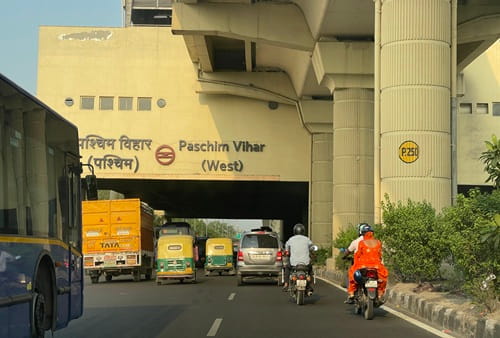
| Metro Stations | Paschim Vihar East – Green Line; Paschim Vihar West – Green Line |
| Additional Metro | Peeragarhi – Green Line; Madipur – Green Line |
| Railway Stations | Shakurbasti Railway Station; Mangolpuri Railway Station |
| Key Roads | Outer Ring Road; Rohtak Road; Bhagwan Mahavir Marg |
| Airport Distance | IGI Airport – approx. 17–20 km via NH-48 |
| Avg. Apartment Rate | ₹18,900 per sq ft (6.2% YoY appreciation) |
| Monthly Rental Range | ₹15,400–₹51,000 |
| Key Hospital | Sri Balaji Action Medical Institute (~1.82 km); Maharaja Agrasen Hospital |
| Key School | DAV School (0.03 km); GD Goenka Public School; Bosco Public School |
| Key Hotel | Radisson Blu West Delhi (0.30 km) |
| Resident Rating | 4.5/5 connectivity; 4.1/5 safety |
Paschim Vihar Delhi Connectivity – Green Line Metro, Outer Ring Road, and Rail
Paschim Vihar East and Paschim Vihar West — both on the Green Line — give the locality a two-station metro presence that most Delhi residential zones don’t have within their own boundaries. The Green Line runs eastward through Punjabi Bagh, Inderlok, Netaji Subhash Place, and Central Delhi, and westward toward Mundka and the extended Bahadurgarh metro corridor. Peeragarhi metro station provides a third Green Line option for residents in the locality’s western sub-localities. Madipur station extends the corridor toward Rajouri Garden and Punjabi Bagh for residents preferring Blue Line access at those interchanges.
Outer Ring Road runs along Paschim Vihar’s eastern edge — the primary arterial road connecting northward toward Rohini and southward toward Peeragarhi, Janakpuri, and the Ring Road junction. Rohtak Road (NH-9 toward Haryana) provides the primary westward highway access, passing through the locality’s immediate zone. Bhagwan Mahavir Marg connects to Netaji Subhash Place and the broader North Delhi office corridor.
Shakurbasti Railway Station and Mangolpuri Railway Station handle suburban rail within accessible distance. Delhi Cantonment Railway Station is another option for intercity travel at approximately 15 km. IGI Airport at 17 to 20 km via NH-48 is a 30 to 45 minute drive — a practical airport distance for the locality’s business and travel-oriented resident base. Radisson Blu Hotel, 0.30 km from the locality core, reflects the commercial maturity of the zone and provides business hospitality within walking reach.
Paschim Vihar Delhi Landmarks and Key Facilities
The school density around Paschim Vihar is genuinely exceptional and deserves more attention than it usually gets. DAV School is 0.03 km from the locality centre — effectively inside the residential zone. Nine schools sit within 1.05 km, creating a school-per-block density that directly explains why families consistently choose Paschim Vihar over comparably priced West Delhi alternatives. GD Goenka Public School, Bosco Public School, St. Froebel Senior Secondary School, and Sant Nirankari Public School are among the named schools within the zone’s immediate catchment.
Japanese Park — one of Delhi’s finest urban parks — is within approximately 3 km of Paschim Vihar. A 76-acre Japanese-themed landscape with manicured gardens, water bodies, themed pavilions, walking trails, and a stone bridge over a central lake, the park is a weekend destination that draws visitors from across Northwest Delhi. For Paschim Vihar residents, it functions as a neighbourhood recreational anchor in the way that urban parks of this quality rarely do for Indian residential zones.
Jwala Heri Market is Paschim Vihar’s primary daily shopping hub — a well-organised, busy market covering grocery, clothing, electronics, banking, dining, and daily service requirements within the colony. Paschim Vihar Market extends the retail options further. Outer Ring Road’s commercial strip hosts fuel stations, automobile services, and larger format retail. Adventure Island amusement park, Metro Walk Mall, and City Centre Rohini are within approximately 5 to 7 km for family entertainment and branded retail.
Sri Balaji Action Medical Institute — a full-service multi-specialty hospital at approximately 1.82 km — is the zone’s primary large private hospital. Maharaja Agrasen Hospital covers general and secondary care within the locality. Eight hospitals within 2 km confirms a genuinely strong healthcare density for a West Delhi residential zone.
Schools, Colleges, and Healthcare in Paschim Vihar
The nine schools within 1.05 km define Paschim Vihar’s educational infrastructure quality more than any single institution. DAV Public School at 0.03 km, GD Goenka, Bosco Public, and Government Higher Secondary School collectively cover the full range of educational preference from government to premium private. For higher education, Delhi Technological University (DTU) is approximately 10 km and accessible by Green Line metro.
Healthcare is anchored by Sri Balaji Action Medical Institute — known locally as Action Balaji Hospital and frequently cited by residents in reviews as the first choice for medical referrals within the zone. It handles cardiac care, orthopaedics, neurology, and multi-specialty emergency services for the West Delhi corridor. Maharaja Agrasen Hospital covers secondary care and is referenced by residents in the same breath as the locality’s healthcare positives.
The remaining six hospitals within 2 km cover maternity, paediatrics, eye care, and general medicine at clinic and nursing home level — creating a layered healthcare ecosystem without requiring long journeys to tertiary care.
Paschim Vihar Delhi Real Estate – Property Rates and Market
Paschim Vihar’s apartment average stands at ₹18,900 per sq ft with 6.2% year-on-year appreciation — positioning it slightly below the Delhi overall average of ₹18,200–₹18,400 per sq ft on most platforms, but significantly above comparable-sized West Delhi addresses at comparable distance from the city centre. With 700+ properties available to buy and 200+ for rent, it is one of the more liquid residential markets in West Delhi.
Monthly rentals run from ₹15,400 for studio and 1 BHK configurations to ₹51,000 for large premium units — a range confirming the zone’s mixed residential demographic from working professionals to affluent families. Eldeco Camelot is the noted premium project in the locality, with prices from ₹7.42 crore to ₹8.28 crore for its top tier. Sunder Vihar — an adjacent sub-locality within Paschim Vihar PIN 110087 — shows property rates of ₹9,571 to ₹23,611 per sq ft as of December 2025, capturing the range from mid to premium buyer in the zone.
The locality has consistently been a West Delhi “sweet spot” — wide roads, planned colony infrastructure, good school density, hospital access, and two Green Line metro stations — at prices that remain below South Delhi’s comparable premium zones. For long-term end-users, particularly families anchored to schools, the value proposition has remained stable for decades.
Paschim Vihar Delhi Environment – Japanese Park Access, Air Quality, and Community
Paschim Vihar’s environmental quality is West Delhi’s strongest residential argument. The planned colony’s wide internal roads, tree-lined avenues, sector-level parks, and the Outer Ring Road’s peripheral position — rather than passing through the colony — create an internal environment that residents consistently describe as peaceful and suburban in character. Paschim Vihar District Park is the community’s primary internal green space, used daily for morning walks, yoga, and children’s outdoor activity.
Japanese Park’s proximity at approximately 3 km takes the green infrastructure argument a level higher: families who live in Paschim Vihar have one of Delhi’s finest urban parks within a short drive or auto ride, used routinely rather than as a special occasion.
Air quality tracks Northwest Delhi’s seasonal pattern. The Outer Ring Road generates vehicular pollution on the colony’s eastern fringe; Rohtak Road adds highway traffic exposure to the western edge. Interior blocks — the majority of the colony — have measurably better air quality than ring road-adjacent housing. Winter inversion months bring the same AQI deterioration that affects all of Northwest Delhi; spring and post-monsoon periods are significantly cleaner.
Peak-hour traffic pressure at the Outer Ring Road junction and parking congestion in the Jwala Heri Market zone are the two most consistently flagged quality-of-life frictions. Internal road quality is good — DDA colony planning standards from construction have been maintained — though some older pockets have road surfaces that have not seen recent resurfacing.
5 FAQs About Paschim Vihar Delhi
Q1. How many metro stations serve Paschim Vihar?
Two dedicated Green Line stations — Paschim Vihar East and Paschim Vihar West — serve the locality. Peeragarhi and Madipur on the same Green Line provide additional options for different sub-localities. The Green Line connects eastward to Punjabi Bagh, Netaji Subhash Place, and Central Delhi, and westward toward Mundka and Bahadurgarh.
Q2. What is the school infrastructure like in Paschim Vihar?
Nine schools within 1.05 km of the locality centre, including DAV School at 0.03 km — effectively within the colony. GD Goenka Public School, Bosco Public School, St. Froebel Senior Secondary School, and Sant Nirankari Public School are among the named options. This school density is the primary reason families consistently choose Paschim Vihar over nearby West Delhi addresses.
Q3. What are the property rates in Paschim Vihar?
Apartments average ₹18,900 per sq ft with 6.2% year-on-year appreciation. Monthly rentals run ₹15,400 to ₹51,000. Premium project Eldeco Camelot lists units from ₹7.42 crore. The locality has 700+ properties available to buy, making it one of West Delhi’s most liquid residential markets.
Q4. How far is Japanese Park from Paschim Vihar?
Approximately 3 km — a short auto or drive. Japanese Park is a 76-acre themed urban garden with manicured landscapes, water features, walking trails, and themed pavilions. For Paschim Vihar families, it functions as the primary large green recreation destination and is regularly visited on weekends.
Q5. Which hospital is largest near Paschim Vihar?
Sri Balaji Action Medical Institute (Action Balaji Hospital) at approximately 1.82 km is the largest multi-specialty hospital serving the zone. Eight hospitals in total sit within 2 km. Maharaja Agrasen Hospital covers secondary care within the locality, while Max Hospital Pitampura and Saroj Super Speciality Hospital are accessible within 8 km for specialised tertiary care.