
Pragati Vihar South Delhi is not a typical Delhi locality — it is a premium government residential and institutional zone in the Lutyens’ Delhi buffer, bounded by Bhishm Pitamah Marg and Lodhi Road, harbouring the CGO Complex, Jawaharlal Nehru Stadium, and the institutional geography of Central Government administrative Delhi. PIN code 110003. Adjacent to Nizamuddin West, Jangpura, Lodhi Colony, and the Lodhi Garden greenway, it occupies some of the most centrally located and environmentally privileged real estate in the entire capital.
The locality’s character is shaped almost entirely by its government residential typology — quarters, flats, and bungalows allocated to IAS officers, defence personnel, and senior government employees — and by the scale of the institutions it hosts: the JLN Stadium, the CGO Complex (Central Government Offices Complex), and the corridors of Lodhi Road that connect to the Ministry of External Affairs, AIIMS, and the Ring Road’s institutional district. Residents here include senior civil servants, diplomats, defence officers, and the families of top-tier government professionals. The market is thin in transactions but exceptionally strong in value.
Quick Overview
| Feature | Details |
| Location | South Delhi (Lodhi Road-Bhishm Pitamah Marg zone) |
| PIN Code | 110003 |
| Assembly Constituency | Kasturba Nagar |
| Nearest Metro | Jawaharlal Nehru Stadium – Violet Line (within Pragati Vihar, ~0.3 km from CGO) |
| Additional Metro | Lajpat Nagar – Violet + Pink Line; Jangpura – Violet Line |
| Railway Stations | Sewa Nagar Railway Station; Lajpat Nagar Railway Station (~3–4 km) |
| Key Roads | Bhishm Pitamah Marg; Lodhi Road; Mathura Road; Ring Road |
| Airport Distance | IGI Airport – approx. 15–18 km via Ring Road |
| Key Landmark | Jawaharlal Nehru Stadium; CGO Complex |
| Property Rate | ₹6,666–₹23,250 per sq ft (2026); Pragati Vihar avg. ~₹28,600 per sq ft (Square Yards) |
| Key Hospital | Moolchand Hospital; CGHS Wellness Centre Lodhi Road; Sitaram Bhartia Institute |
| Key Schools | Air Force Bal Bharati School; DPS Mathura Road |
| Green Access | Lodhi Gardens (~1 km); Sunder Nursery; India Gate lawns |
| Resident Character | Senior government officers, defence personnel, IAS/IPS families |
Pragati Vihar South Delhi Connectivity – Violet Line Metro, Lodhi Road, and Ring Road
Jawaharlal Nehru Stadium metro station on the Violet Line is effectively within Pragati Vihar — approximately 0.3 km from the CGO Complex, within walking distance of the locality’s residential blocks. The Violet Line from JLN Stadium connects northward through Mandi House, Indraprastha, Akshardham, and Yamuna Bank toward Kashmere Gate, and southward through Jangpura, Lajpat Nagar, Sarai Kale Khan, Hazrat Nizamuddin, and the full Violet Line spine toward Faridabad’s Ballabhgarh. At Lajpat Nagar — two stations south — the Pink Line interchange opens the ring corridor for lateral connectivity across Delhi.
Lodhi Road is the locality’s primary arterial connector — one of Delhi’s most significant institutional roads, running through the heart of the Lutyens government zone and connecting the Ministry of External Affairs, India International Centre, Khan Market, and the AIIMS corridor. Bhishm Pitamah Marg is the Pragati Vihar boundary road. Mathura Road (NH-44) is accessible for south-eastward road travel toward Noida and Faridabad. Ring Road connects the locality toward AIIMS, RML Hospital, Dhaula Kuan, and IGI Airport at approximately 15 to 18 km.
Sewa Nagar Railway Station and Lajpat Nagar Railway Station provide suburban rail connectivity. The New Delhi Railway Station is accessible via Violet Line metro in approximately 20 minutes for intercity train travel.
Pragati Vihar South Delhi Landmarks and Key Facilities
Jawaharlal Nehru Stadium is the locality’s most prominent and nationally recognised landmark. Built for the 1982 Asian Games and renovated for the 2010 Commonwealth Games, the 75,000-capacity multi-purpose stadium hosts India’s premier cricket and athletics events, concerts, and large public gatherings. Its presence defines the eastern edge of Pragati Vihar and creates the occasional crowd and noise event that residents specifically mention as the locality’s rare disruption — “once in a while,” as one resident notes, and “not a major issue.”
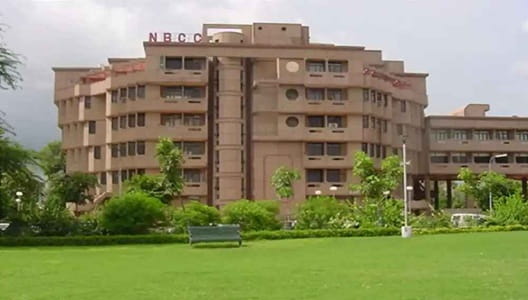
CGO Complex — the Central Government Offices Complex — is the administrative heart of the zone, housing dozens of Union Government ministry offices and regulatory bodies. Its presence is what gives Pragati Vihar its distinctive government-residential character: the people who work in the CGO Complex tend to live in Pragati Vihar’s government quarters, creating an unusually homogeneous, professionally distinguished residential community.
Lodhi Gardens — one of Delhi’s most beautiful historical parks, with 15th and 16th century Mughal tombs set within 90 acres of manicured lawns and trees — is approximately 1 km from Pragati Vihar. Sunder Nursery, a 16th-century garden restored as a UNESCO-associated urban ecological park, is adjacent to the broader zone. India Gate’s lawns are accessible by road or metro within 15 minutes. These green destinations give Pragati Vihar residents a natural and heritage recreation quality that no other South Delhi residential zone can replicate.
Khan Market — Delhi’s most expensive commercial market with premium restaurants, boutiques, bookshops, and cafes — is within 2 to 3 km. India International Centre, the capital’s most prestigious intellectual and cultural club, is similarly close. These are the everyday lifestyle assets of a neighbourhood whose residents are senior enough in the Indian institutional hierarchy to take them for granted.
Schools, Healthcare, and Real Estate in Pragati Vihar
Air Force Bal Bharati School — one of Delhi’s most consistently regarded CBSE schools and a flagship of the Air Force educational network — is the locality’s most cited school. DPS Mathura Road (Delhi Public School on Mathura Road) is the second named school, accessible within minutes from the residential zone. Both carry reputations that attract families from across Delhi to the broader Lodhi-Pragati Vihar zone specifically for school access.
Sitaram Bhartia Institute of Science and Research — at 0.3 km from Bhishm Pitamah Marg — is a private research and medical institution within the locality’s immediate boundary. Moolchand Hospital is the most directly cited hospital for Pragati Vihar residents — a well-regarded multi-specialty private hospital specifically described by a resident as “just a few minutes away for any emergency.” CGHS Wellness Centre Lodhi Road provides government health services for CGHS-enrolled government employees and their families within the zone. AIIMS — India’s premier government hospital — is approximately 5 km via Bhishm Pitamah Marg and Ring Road.
The property market in Pragati Vihar is thin but extraordinarily valued. The NoBroker data shows rates of ₹6,666 to ₹23,250 per sq ft for the mix of builder floors and apartments that represent the non-government residential stock. Square Yards’ Pragati Vihar average is approximately ₹28,600 per sq ft. The typical government quarters are not freely transacted — they are allocation-based — so the open market is limited to specific private residential properties within the locality’s boundary.
Environment – Lodhi Gardens Adjacency, Air Quality, and Lutyens Character
Pragati Vihar’s environmental profile is the best in any Delhi locality covered in this series. Lodhi Gardens’ 90 acres of green, Sunder Nursery’s 16th-century ecological park, the open lawns of India Gate, and the broad tree-lined avenues of the Lutyens Delhi zone all contribute to an air quality, noise environment, and visual character that is simply incomparable within the city.
Residents describe wide clean roads, well-maintained parks, and a security standard consistent with a locality where government officers of senior rank form the majority of the residential community. The Kasturba Nagar ward and Pragati Vihar’s police and security presence — augmented by the CGO Complex’s own security infrastructure and the JLN Stadium’s event security apparatus — create a safety standard that residents consistently rate highly.
The JLN Stadium event days are the one acknowledged environmental disturbance — crowds, traffic, noise, and temporary disruption on match or concert days. These are infrequent enough that residents treat them as acceptable rather than frustrating.
Air quality is significantly better than North, East, and West Delhi zones of comparable urban density. The open Lodhi Garden green belt, the relatively low vehicle density on Lodhi Road compared to commercial corridors, and the Lutyens zone’s planning legacy of wide setbacks and tree-lined avenues create a microclimate measurably superior to the city average. Winter inversions still affect the zone during October to January, but from a cleaner starting baseline.
5 FAQs About Pragati Vihar South Delhi
Q1. Which metro station serves Pragati Vihar?
Jawaharlal Nehru Stadium on the Violet Line is approximately 0.3 km from the CGO Complex — effectively within the locality. The Violet Line connects northward through Mandi House and Indraprastha, and southward through Lajpat Nagar (Pink Line interchange) toward Faridabad. Khan Market metro station on the Violet Line is one stop north.
Q2. What kind of residential community lives in Pragati Vihar?
Predominantly senior government officers, IAS/IPS/IFS cadre, defence personnel, and the families of top-tier Central Government employees allocated quarters in the CGO and Lodhi Road zone. The open market residential stock is limited — most properties are government allocation-based, making Pragati Vihar one of Delhi’s most exclusively government-residential localities.
Q3. What are property rates in Pragati Vihar?
Open-market rates range from ₹6,666 to ₹23,250 per sq ft based on NoBroker 2026 data. Square Yards cites an average of approximately ₹28,600 per sq ft. Steady rental demand from top professionals and corporate executives keeps yield strong. The thin transaction volume reflects the government allocation character of most residential stock rather than weak demand.
Q4. How close is Lodhi Gardens from Pragati Vihar?
Approximately 1 km — a walkable distance for residents in the nearest blocks. Lodhi Gardens is a 90-acre historical park containing 15th and 16th century Mughal tombs set in manicured lawns and shaded walking paths. It is one of Delhi’s most visited heritage and recreational green spaces and functions as the locality’s primary daily green access.
Q5. What is the CGO Complex?
The Central Government Offices Complex is a large cluster of Union Government ministry offices and regulatory bodies within Pragati Vihar. It is the primary employer for the residential community living in the zone’s government quarters. The CGO Complex’s presence is what gives Pragati Vihar its distinctive institutional character — a government-administrative zone embedded within Delhi’s most historically significant residential geography.