
Shankar Vihar Delhi is one of the most genuinely unusual residential addresses in the national capital — and the unusual part is not a polite euphemism for a challenge. It is a well-planned, clean, well-maintained, security-rich residential locality inside the Delhi Cantonment zone in South West Delhi, housing primarily defence personnel and their families. PIN code 110010. The locality sits within the cantonment area, adjacent to Vasant Vihar to the north, Moti Bagh to the east, and Aerocity to the south-west, and it carries a character that cannot be replicated by civilian residential developments at any price point.
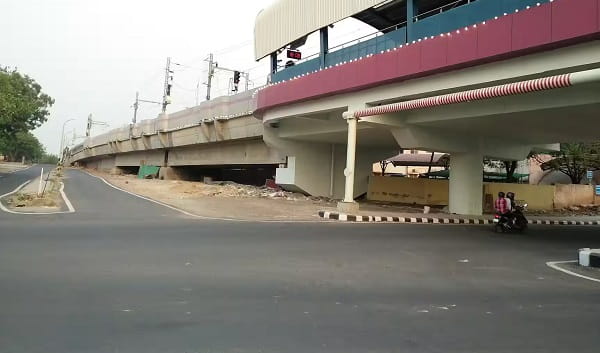
The Shankar Vihar metro station on the Magenta Line operates within the locality — and it holds a distinction that makes it unique across the entire Delhi Metro network: it is the only station in the system where civilian entry and exit are restricted. Commuters must produce a valid defence ID card to exit the station. This is not an exceptional security measure in the policy sense — it is simply what happens when a metro corridor runs through a military zone, and the station happens to be embedded within it rather than on its edge.
Shankar Vihar Delhi Quick Overview
| Feature | Details |
| Location | South West Delhi (Delhi Cantonment zone) |
| PIN Code | 110010 |
| Metro Station | Shankar Vihar – Magenta Line (restricted – defence ID required) |
| Metro Line Position | Between Terminal 1–IGI Airport and Vasant Vihar stations |
| Key Roads | Thimayya Marg, Sardar Patel Marg, Outer Ring Road |
| Airport Distance | IGI Airport – approx. 6 km |
| Nearest Railway Station | Delhi Cantonment Railway Station |
| Resident Profile | Primarily defence personnel and families |
| Key School | Army Public School Shankar Vihar (CBSE, Nursery–Class XII) |
| Hospitals | Divya Prastha Hospital, Safdarjung Hospital (nearby), Army Base Hospital |
Shankar Vihar Connectivity – Magenta Line, Roads, and Airport Access
The Shankar Vihar metro station on the Magenta Line is a curious asset. Inaugurated on May 29, 2018, as part of Phase III, it sits on the Magenta Line between Terminal 1–IGI Airport station (heading toward the airport and Janakpuri West) and Vasant Vihar station (heading toward Hauz Khas, Botanical Garden, and Noida). For defence residents, this positioning is exceptional — direct metro access to IGI Airport Terminal 1 on one side, and to South Delhi’s Magenta Line corridor on the other. The catch, clearly documented in DMRC records and station signage, is that the station lies entirely within an army unit and requires defence ID for exit. Civilians travelling through on trains pass through without stopping access, but the station effectively functions as a residents-only transit point.
Road connectivity is Shankar Vihar’s stronger civilian-facing card. Thimayya Marg and Sardar Patel Marg connect the locality outward toward Dhaula Kuan, Ring Road, and the NH 48 corridor. IGI Airport is approximately 6 km away — one of the genuinely closest residential addresses to the airport in Delhi, comparable only to Aerocity itself and a handful of Mahipalpur plots. For defence personnel with frequent travel requirements, this proximity translates directly into reduced commute stress.
Delhi Cantonment Railway Station is the nearest rail option, handling intercity trains on the Western Railway corridor. Central Delhi is accessible via Sardar Patel Marg and Ring Road — approximately 20 to 25 minutes outside peak hours toward Connaught Place. Dhaula Kuan’s ISBT provides intercity bus connectivity. App-based cabs and autos serve the locality but with some navigational challenges given the cantonment road structure.
Shankar Vihar Landmarks and Key Facilities
Army Public School Shankar Vihar is the locality’s flagship institutional landmark. Established in 2007 under the Army Welfare Education Society (AWES), it is a CBSE-affiliated co-educational school running from Nursery (Balvatika) through Class XII. Its motto is “Truth Is God,” and it operates with the structured academic and co-curricular character that Army Public Schools across India maintain as a system standard. For defence families with school-going children — the core residential demographic of Shankar Vihar — this school’s presence inside the locality eliminates the school commute challenge entirely.
WAC Shopping Complex serves the locality’s retail needs with a range of shops, convenience services, and daily essentials accessible without needing to leave the cantonment area. Community centres, sports facilities, and internal parks serve the recreational needs of the resident community in the organised, well-maintained manner that cantonment zones typically deliver. The discipline of land use and maintenance within cantonment areas produces a quality of public space that civilian zones rarely match.
Safdarjung Hospital — one of Delhi’s largest government tertiary hospitals — is accessible from Shankar Vihar and provides emergency and specialised care at a scale that the locality’s in-campus healthcare options complement rather than compete with. Divya Prastha Hospital and Om Hospital are accessible for secondary and routine care needs.
The proximity to Vasant Vihar means residents can reach Basant Lok Market, PVR Priya, and the Vasant Vihar restaurant and retail ecosystem within a few minutes by road — important context given the locality’s own limited commercial offerings.
Schools and Healthcare in Shankar Vihar
Army Public School Shankar Vihar is the primary education option and handles the vast majority of the locality’s school-going population. Other Army Public Schools in Delhi Cantonment are accessible for families with specific educational preferences. The AWES network’s consistency means that defence families transferring into Shankar Vihar from other cantonment postings know what to expect academically and socially.
Dr. APJ Abdul Kalam Senior Secondary School in the broader Delhi Cantonment area extends education options beyond the Army Public School system for certain residents.
Healthcare within the cantonment zone benefits from the Army Base Hospital — the primary defence medical facility in the Delhi Cantonment — which handles inpatient, surgical, and emergency care for defence personnel. Safdarjung Hospital and VMMC are accessible for civilian or supplementary medical needs. The combination of military medical infrastructure and proximity to Safdarjung gives Shankar Vihar’s resident community a healthcare safety net that most Delhi localities cannot match.
Shankar Vihar Real Estate – Access, Property Character, and Investment Context
Shankar Vihar’s property market operates under structural constraints that make it fundamentally different from civilian locality real estate. Property ownership within cantonment areas is largely restricted — much of the residential stock is government accommodation allotted to defence personnel rather than transacted in an open market. Private property in the locality exists but is limited in volume, and transactions involve processes and approvals not applicable to standard Delhi residential sales.
Rental demand exists but is naturally constrained by the entry restriction framework — landlords of privately held properties here note that fewer outside tenants know about the locality, and the access requirement limits the tenant pool to defence-affiliated individuals. For buyers interested in the cantonment zone’s lifestyle characteristics — security, greenery, wide roads, maintained parks, airport proximity — these constraints need to be clearly understood before approaching a transaction.
For price context, the broader Delhi Cantonment zone is tracked at premium rates reflecting the South West Delhi positioning and airport proximity. Properties on the cantonment edge closer to civilian-access roads command open-market rates comparable to Vasant Vihar and Aerocity adjacency pricing.
Shankar Vihar Environment – Cantonment Quality, Greenery, and Air Character
Shankar Vihar’s environmental character is shaped by the cantonment land management system in ways that civilian locality planning rarely replicates. Wide, well-maintained internal roads. Trees planted systematically along every lane and allowed to mature without being felled for commercial hoardings or illegal constructions. Parks maintained by the cantonment board to a consistent standard. Sports facilities — indoor and outdoor — kept in functional condition rather than neglected between audit cycles. The result is a lived-in green quality that does not require special effort from residents because the institutional structure delivers it automatically.
Air quality benefits from the low traffic density inside the cantonment zone — vehicle movement is limited and regulated, heavy vehicles do not transit through, and industrial activity is absent. The proximity to the airport means some aircraft noise depending on wind direction and landing approach corridors, but this is typically a nighttime-minimal factor for military residential zones that handle noise management differently from civilian areas.
Shankar Vihar holds the specific distinction of being part of an urban area where the institutional framework actively produces better environmental quality rather than merely aspiring to it. For the resident demographic that can access it, that is a significant and genuine quality-of-life advantage.
FAQs About Shankar Vihar Delhi
Q: Who can live in Shankar Vihar Delhi?
A: Shankar Vihar is primarily a defence personnel residential locality within the Delhi Cantonment zone. Most residents are serving or retired military personnel and their families. Private property exists but is limited in volume, and access restrictions apply to the locality as a cantonment area.
Q: Why is the Shankar Vihar metro station restricted?
A: Shankar Vihar metro station on the Magenta Line sits entirely within an army unit of the Delhi Cantonment. Entry and exit from the station require a valid defence ID card. It is the only station in the entire Delhi Metro network with this civilian restriction — a consequence of the metro corridor passing through a military zone rather than alongside it.
Q: How far is IGI Airport from Shankar Vihar?
A: Approximately 6 km. Shankar Vihar is one of Delhi’s closest residential addresses to the airport — comparable to Aerocity in proximity — making it particularly practical for defence personnel with frequent travel requirements.
Q: What school serves Shankar Vihar residents?
A: Army Public School Shankar Vihar — established in 2007 under the Army Welfare Education Society — offers CBSE education from Nursery through Class XII within the locality. The school operates as part of the Indian Army Public Schools network and maintains the system-wide academic and co-curricular standards of AWES schools.
Q: Is civilian property purchase possible in Shankar Vihar?
A: Private civilian property does exist in limited quantity within and adjacent to the Shankar Vihar cantonment area, but transactions involve cantonment board approvals and restrictions not applicable in standard civilian localities. Buyers should thoroughly understand cantonment property transaction requirements before proceeding.
 Saurav Mehra