
Ankur Vihar Ghaziabad is a developing residential locality in the Loni zone of Ghaziabad district, Uttar Pradesh — positioned at the Delhi-UP administrative boundary where the Pink Line metro’s Phase IV extension has reshaped what proximity to Delhi means for this long-peripheral address. PIN code 201102. The locality is adjacent to Ved Vihar, Hayat Enclave, and the broader DLF Ankur Vihar complex, and shares its boundary with Karawal Nagar on the Delhi side — giving residents informal access to Delhi’s markets, transit, and infrastructure without the official Delhi address.
Ankur Vihar’s residential story has two chapters. In the first, it was an affordable but distant Ghaziabad colony where metro access meant a 8 to 9 km journey to Kashmere Gate. In the second — which began on March 8, 2026 when Khajuri Khas metro station on the Pink Line opened — the nearest metro dropped to approximately 5 km and the connectivity arithmetic changed fundamentally.
| Feature | Details |
| Location | Loni zone, Ghaziabad District, Uttar Pradesh |
| PIN Code | 201102 |
| Nearest Pink Line Metro | Khajuri Khas – Pink Line (opened March 8, 2026, ~5 km) |
| Additional Metro | Shiv Vihar – Pink Line; Johri Enclave – Pink Line; Bhajanpura – Pink Line |
| Railway Stations | Behta Hazipur Railway Station; Noli Railway Station |
| Key Roads | NH-24 (Delhi-Meerut Expressway); Loni Road; Hindon Road |
| Delhi Border | Karawal Nagar, Delhi (immediately adjacent) |
| Nearby Airport | Hindon Civilian Airport (~accessible); IGI Airport (~35 km) |
| Avg. Property Rate | ₹2,600–₹3,400 per sq ft (DLF Ankur Vihar zone) |
| Monthly Rental Range | ₹5,000–₹22,000 |
| Key Hospital | Kavita Poly Clinic and Hospital; Triveni Hospital; Luv Kush Hospital |
| Key Schools | Aryan Public School; Mothers Dreamland Junior High School; India International Secondary School |
| Connectivity Rating | 4.0/5 |
Ankur Vihar Ghaziabad Connectivity – Pink Line Metro, NH-24, and Delhi Border Access
The Pink Line metro’s March 8, 2026 Phase IV extension is the single most consequential connectivity event in Ankur Vihar’s history. Khajuri Khas station — built as a double-decker viaduct with the metro above and a road flyover below — sits approximately 5 km from Ankur Vihar via Karawal Nagar Road. Before this opening, the nearest metro was Kashmere Gate at 8 to 9 km — a distance that deterred metro-dependent buyers and tenants. With Khajuri Khas now operational, the Pink Line’s full ring corridor is accessible: connecting through Bhajanpura, Yamuna Vihar, and Sonia Vihar to the south, and eventually through the complete ring to Lajpat Nagar, Majlis Park, and the full Pink Line network.
Shiv Vihar metro station — one of the Pink Line’s Phase IV additions in the same March 2026 batch — is another Pink Line option accessible from the broader Ankur Vihar-Karawal Nagar-Loni zone. Johri Enclave on the Pink Line extends the accessible network further for residents in the locality’s eastern blocks.
NH-24 — the Delhi-Meerut Expressway — runs through or adjacent to the broader Loni-Ankur Vihar corridor, providing direct road access toward Delhi’s east and toward Meerut via the expressway. Loni Road handles the internal zone connectivity. Hindon Road connects toward the Hindon River and broader Ghaziabad road network. The Delhi border at Karawal Nagar is immediately adjacent, giving residents the practical benefit of Delhi-side market access at Bhajanpura — one of North East Delhi’s most active commercial markets — without crossing into the administrative complexity of Delhi property ownership.
Behta Hazipur and Noli railway stations provide suburban rail access in the broader zone. For long-distance trains, Ghaziabad Junction at approximately 15 km is the primary intercity rail option, accessible by road or connecting through the metro network.
Ankur Vihar Ghaziabad Landmarks and Key Facilities
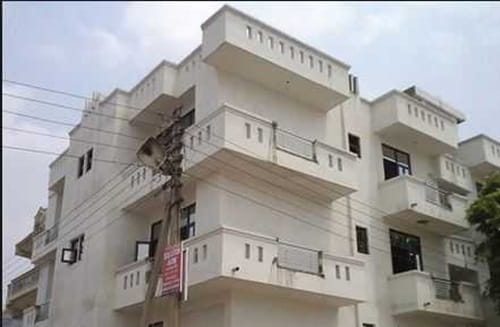
DLF Ankur Vihar — the large residential colony within which Ankur Vihar sits — is divided into four blocks (A, B, C, D), all connected by wide internal roads. This is a meaningful physical differentiator: the block-level organisation with defined internal road widths gives the locality a more legible and navigable character than organic-growth Loni sub-localities.
Bhajanpura Market on the Delhi side of the Karawal Nagar boundary is the primary large-format shopping destination — a dense commercial market covering clothing, electronics, wholesale produce, daily services, and food. Its Delhi-side pricing and product availability is a practical advantage for Ankur Vihar residents that a purely Ghaziabad-registered address would not normally provide.
Apna Park within the DLF complex is the locality’s internal green recreational space — a maintained park used for daily walks, children’s play, and community gatherings. The colony’s restaurant cluster — noted by residents for quality and cleanliness — serves daily dining needs. Satyam Mall provides retail and entertainment within the broader zone’s accessible radius.
Vikas Mall near Shahdara metro station in Delhi is accessible from the zone for larger retail requirements. Coaching centres within the colony’s commercial strips serve the significant student and competitive exam preparation demographic among Ankur Vihar’s residents.
Schools, Colleges, and Healthcare in Ankur Vihar
Aryan Public School within DLF Ankur Vihar is the locality’s most prominently cited school. Mothers Dreamland Junior High School and Mother Dreamland Junior High School (the two related institutions) serve primary and secondary education within the colony. Mothers Care Play and Dry Boarding School handles early childhood education. India International Secondary School and Navjeevan Model Senior Secondary School extend the secondary education options within the broader Ankur Vihar-Gagan Vihar zone.
The locality has a growing coaching institute ecosystem — multiple competitive exam preparation centres within the commercial strips that draw students from across the Loni-Karawal Nagar belt.
Healthcare is anchored by Kavita Poly Clinic and Hospital, Triveni Hospital, and Luv Kush Hospital — all within the Ankur Vihar zone for primary, secondary, and emergency care. Pal Med Health Centre and Radiant Hospital cover diagnostic and secondary outpatient needs. Krishna Hospital is cited in the locality’s extended catchment. For tertiary requirements, GTB Hospital (Government of Delhi’s general hospital) in the Dilshad Garden-Shahdara zone is accessible by Pink Line metro from Khajuri Khas, while St. Stephen Hospital in Tis Hazari and Max Hospital Patparganj cover private tertiary care within the broader metro-accessible network.
Ankur Vihar Ghaziabad Real Estate – Property Rates and Market
Ankur Vihar’s property market is among the most affordable in the Delhi-NCR border zone. DLF Ankur Vihar apartments average ₹2,600 per sq ft on one platform metric and ₹3,400 per sq ft on another — a range that captures both the existing older stock and newer resale transactions at the upper end. The broader Ankur Vihar zone (distinct from DLF Ankur Vihar) averages ₹3,400 per sq ft with a monthly rental range of ₹12,300 to ₹18,500.
This pricing — at roughly one-third of Delhi’s city average — reflects the UP-registration address discount, the pre-2026 metro distance, and the organic-growth character of the residential stock. With the Khajuri Khas Pink Line station now operational at approximately 5 km, the metro discount is compressing. Buyers who acquired in Ankur Vihar before March 2026’s metro opening are positioned to benefit from the 15 to 25% appreciation cycle that metro connectivity typically delivers to previously metro-distant addresses.
Monthly rentals of ₹5,000 to ₹22,000 capture the zone’s demographic range — from the most affordable 1 BHK configurations for single workers to the larger 2 BHK and 3 BHK units for families. Ghaziabad’s property tax cut of up to 40% effective April 15, 2026 reduces annual ownership cost and improves the net yield calculation for Ankur Vihar investors.
A notable data point from Square Yards on overall DLF Ankur Vihar: 6,904 properties available for sale, making it one of the most liquid affordable residential markets in the NCR border zone by listing volume — but also one where buyer selection requires careful assessment of building quality, floor position, and lane-level infrastructure before committing.
Ankur Vihar Ghaziabad Environment – Border Zone Character, Air Quality, and Civic Infrastructure
Ankur Vihar’s environmental picture is characteristic of the North East Delhi-Loni border fringe: developing infrastructure, variable civic quality between blocks, air quality affected by Delhi’s broader pollution dynamics without the benefit of central Delhi’s monitoring and mitigation investment.
Wide main roads within the DLF Ankur Vihar colony layout — a structural legacy of the DLF-era planning — give the locality more open sightlines and better ventilation than tightly packed organic-growth colonies. Apna Park’s maintained green space provides daily recreation within the colony. However, the civic infrastructure gaps that characterise the Loni zone — waterlogging after monsoon, power cuts from UP’s distribution network, garbage management inconsistency in the lanes furthest from main roads — remain as chronic friction points rather than exceptional events.
Air quality in the Loni-Karawal Nagar corridor is influenced by Northeast Delhi’s position in the regional airshed: downwind from agricultural burning zones to the northwest during October-November, affected by the Yamuna floodplain’s flat topography that limits dispersion during winter inversions, and exposed to vehicle emissions from NH-24’s heavy goods movement. The seasonal pattern is poor-to-very-poor from October to January, significantly improving in March through September.
The Pink Line metro’s Phase IV opening is already being tracked as an environmental quality improvement signal — as metro ridership increases, some of the zone’s heavy auto and private vehicle traffic for Delhi commutes should reduce, marginally improving local road-level air quality over the medium term.
FAQs About Ankur Vihar Ghaziabad
Q1. Which metro stations are nearest to Ankur Vihar Ghaziabad?
A: Khajuri Khas on the Pink Line — opened March 8, 2026 as part of Phase IV — is the nearest at approximately 5 km via Karawal Nagar Road. Shiv Vihar, Johri Enclave, and Bhajanpura are additional Pink Line options on the same Phase IV corridor. Before this opening, Kashmere Gate at 8 to 9 km was the nearest metro — a distance that limited the locality’s metro-dependent market.
Q2. Is Ankur Vihar in Delhi or Ghaziabad?
A: Administratively, Ankur Vihar is in Ghaziabad district, Uttar Pradesh — PIN 201102. But it borders Karawal Nagar in Delhi and residents routinely use Delhi-side markets, metro, and hospitals. The locality sits at the administrative Delhi-UP boundary and functions as a hybrid address in daily practice.
Q3. What are property rates in Ankur Vihar Ghaziabad?
A: DLF Ankur Vihar averages ₹2,600 to ₹3,400 per sq ft depending on the data source and property type. Monthly rentals run ₹5,000 to ₹22,000 for 1 to 3 BHK units. The broader Ankur Vihar zone shows ₹3,400 per sq ft with monthly rentals of ₹12,300 to ₹18,500.
Q4. What is the infrastructure character of DLF Ankur Vihar?
A: The colony is divided into four connected blocks (A, B, C, D) with wide internal roads — a planned layout legacy. Internal facilities include restaurants, coaching centres, parks, schools, and daily service shops. The civic gaps — waterlogging, power cuts, road quality in some lanes — reflect the Loni zone’s municipal infrastructure level rather than the colony planning.
Q5. How has the Pink Line metro changed Ankur Vihar’s investment outlook?
A: Before March 2026, the nearest metro was 8 to 9 km away — a meaningful deterrent for metro-dependent buyers. With Khajuri Khas Pink Line station now at approximately 5 km, the locality crosses into metro-accessible territory. The standard 15 to 25% appreciation effect from metro proximity is expected to play out over 18 to 36 months, benefiting buyers who acquired before or shortly after the opening.