
Budh Vihar Delhi occupies a quietly significant residential position in the Northwest Delhi belt — bordering Rohini’s established sectors, sitting close to Rithala and the Western Yamuna Canal, and carrying a density and developmental trajectory that puts it in a different category from the fully built-out Rohini sectors it neighbours. PIN code 110085 (Phase I) and 110086. Divided into Phase I and Phase II, the locality is adjacent to Rohini Sector 5, Pooth Kalan, and Vijay Vihar — names that carry the broader Rohini residential identity — while maintaining its own distinct colony character built around independent floors, builder constructions, and affordable family housing.
The story of Budh Vihar is partly the story of what happens to a neighbourhood when a metro station arrives nearby. Rithala on the Red Line, approximately 2.4 km from the locality, brought measurable demand and infrastructure attention to this belt. The area has since been described — accurately — as having development potential that is not fully priced in, making it attractive to first-time buyers and investors who recognise the Rohini adjacency premium without yet paying full Rohini prices.
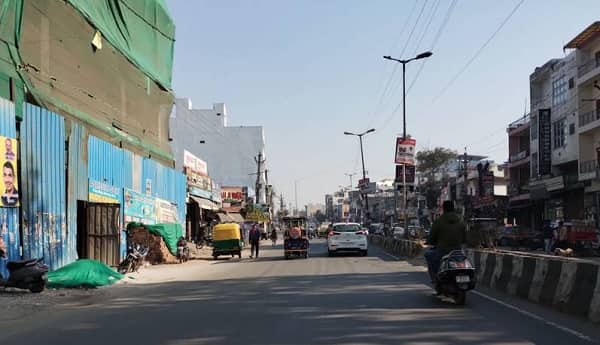
Budh Vihar Delhi Quick Overview
| Feature | Details |
| Location | Northwest Delhi |
| PIN Codes | 110085 (Phase I), 110086 |
| Nearest Metro Station | Rithala – Red Line (approx. 2.4 km) |
| Additional Metro | Rohini West – Red Line |
| Nearest Railway Station | Mangolpuri Railway Station – approx. 5.4 km; Nangloi – approx. 6 km |
| Key Roads | Main Kanjhawala Road, Outer Ring Road, Rithala Road |
| Property Rate (2026) | Approx. ₹10,538 per sq ft |
| Key Landmarks | Budh Vihar Temple Complex, Rohini Sports Complex, Japanese Park |
| Hospitals | Brahm Shakti Hospital, Nulife Multi-Speciality Hospital |
| Nearby Retail | City Centre Rohini, M2K Cinemas Complex |
Budh Vihar Connectivity – Red Line Metro, Roads, and Rail
Rithala Metro Station on the Red Line is the primary metro access point for Budh Vihar residents, sitting approximately 2.4 km from the locality — a distance that most residents cover by e-rickshaw or a short auto in 8 to 12 minutes. Rithala is the western terminal of the Red Line, meaning every train that departs here goes toward Shaheed Sthal or New Delhi, covering Civil Lines, Kashmere Gate, Welcome, and the full Red Line spine. For residents commuting toward North Delhi institutions or connecting to Yellow Line at Kashmere Gate for Central Delhi access, Rithala is the practical starting point.
Rohini West metro station is another Red Line option, marginally further but accessible for residents in Budh Vihar’s eastern blocks closer to the Rohini sector boundary. Together these two stations give the locality adequate metro coverage without requiring residents to travel far.
Main Kanjhawala Road provides bus connectivity toward Rohini and Pitampura within approximately 20 minutes of travel. Outer Ring Road gives direct road access into the broader Northwest Delhi network and connects toward Pitampura, Shalimar Bagh, and the Punjabi Bagh junction. Mangolpuri Railway Station is approximately 5.4 km away for suburban rail connections. Nangloi Railway Station is similarly accessible. IGI Airport at approximately 35 to 40 km by road is a longer journey, most efficiently managed via metro to the Yellow Line with an interchange.
Budh Vihar Landmarks and Key Facilities
Budh Vihar Temple Complex is the locality’s most distinctive landmark — a Buddhist temple complex that hosts regular meditation sessions, workshops, and festival-specific events including special ceremonies and lantern lighting on Vesak and Buddha Purnima. It is the kind of community religious institution that shapes neighbourhood identity in a way that outlasts any individual resident tenure.
The Japanese Park, accessible from the Rohini belt near Budh Vihar, is one of Delhi’s better-known themed parks — featuring miniature structures inspired by prominent Indian and Japanese architectural motifs. It draws families from across Rohini and the broader Northwest Delhi zone for morning walks, picnics, and weekend outings. Its adjacency gives Budh Vihar residents access to a park of a quality and scale that the locality’s own green infrastructure cannot independently provide.
Rohini Sports Complex — within practical reach — offers a range of organised sports facilities including swimming, athletics, and indoor games. M2K Cinemas Complex serves entertainment and retail needs, providing multiplex cinema and branded shopping within a short commute from the locality. City Centre Rohini is the primary mall destination for Budh Vihar and surrounding areas, covering the full spectrum of food, retail, and leisure.
Budh Vihar Market handles daily grocery, vegetable, clothing, and service requirements within the locality, keeping most weekday needs resolvable without long travel.
Schools, Colleges, and Healthcare in Budh Vihar
Prince Public School is one of the well-known educational institutions directly serving Budh Vihar’s school-going population. CBSE Patrachar Vidyalaya — a distance education and examination institution for students pursuing Class 10 and 12 through the open school channel — is accessible from the locality for students not enrolled in regular school streams. Keshav Mahavidyalaya, a Delhi University college in the broader Northwest Delhi zone, handles undergraduate education for the area’s higher education population.
Maharaja Pyarelal International School and B.R. Tyagi Public School serve Phase II residents. The school density within Budh Vihar and its Rohini sector neighbours is adequate for a middle-class residential community, though the quality ceiling tends to push families toward Rohini’s more established school options as children advance to secondary level.
Brahm Shakti Hospital is the locally prominent hospital serving routine and secondary care needs. Nulife Multi-Speciality Hospital extends healthcare access for more complex cases. For emergency and specialised care, Baba Saheb Ambedkar Hospital — a large government facility serving the Northwest Delhi belt — is accessible within 20 to 30 minutes. Fortis Hospital and MAX Hospital are reachable via Outer Ring Road for tertiary care needs.
Budh Vihar Real Estate – Property Rates and Investment Outlook
Budh Vihar’s property market current average stands at approximately ₹10,538 per sq ft — a figure that reflects its positioning as a more affordable alternative to the fully valued Rohini sectors immediately adjacent. Rohini Sector 5 and Sector 20 typically command higher rates, and the price gap has been the consistent reason Budh Vihar attracts buyers who want Rohini proximity without full Rohini pricing.
Rental demand is described as strong relative to price level — the affordability drives occupancy from working-class and lower-middle-income tenant profiles who need Northwest Delhi addresses for employment access. Monthly rents for 2 BHK units in the locality are accessible enough to maintain low vacancy rates through market cycles.
The locality’s housing stock is predominantly independent floors and builder constructions — low-rise developments that are dense but organised. Phase I roads are adequately maintained, and the density level, while high, has not produced the overcrowding that affects some comparable Northwest Delhi neighbourhoods. The locality is described by residents as “densely populated but properly organised” — a balance that keeps livability at an acceptable level without meeting the comfort threshold of the better Rohini sectors.
Investment case: Rithala metro station’s presence has already contributed one wave of value appreciation. The Rohini Sector 14, 15, 16 corridor’s ongoing development, combined with the Outer Ring Road’s connectivity utility, suggests Budh Vihar will continue to benefit from its Rohini adjacency as demand in the established sectors pushes buyers outward toward still-affordable options.
Budh Vihar Environment – Canal Proximity, Parks, and Urban Character
The Western Yamuna Canal runs near Budh Vihar’s boundary — a functional irrigation and water management channel that creates a linear green buffer on the locality’s edge. While it is not a recreational waterfront, its presence prevents the dense construction pressure that built-to-boundary blocks in purely landlocked neighbourhoods experience. The canal boundary gives certain Budh Vihar blocks a degree of open eastern exposure that benefits light and air quality.
The Japanese Park’s proximity — a direct walking or short e-rickshaw trip for most Budh Vihar residents — provides the kind of organised outdoor green access that the locality itself cannot sustain through its own DDA park stock alone. The park’s morning crowds from across Rohini confirm that Budh Vihar residents integrate it into daily routine effectively.
Air quality in Budh Vihar tracks the Northwest Delhi seasonal pattern — relatively clean during monsoon and autumn, deteriorating meaningfully during winter inversion and stubble-burning season. The absence of heavy industry directly within or adjacent to the locality helps avoid the industrial pollution layer that affects southern and eastern Delhi more heavily. Drainage quality has been flagged by residents — the drainage system is poor and water collects during rain, a monsoon-season infrastructure gap that affects many Northwest Delhi localities with insufficient stormwater management. Traffic jams and parking pressure during peak hours are the other consistently cited friction points.
FAQs About Budh Vihar Delhi
Q: Which metro station serves Budh Vihar?
A: Rithala Metro Station on the Red Line is the nearest at approximately 2.4 km from the locality. Rohini West on the same Red Line is another accessible option for eastern Budh Vihar blocks. Both stations connect toward Kashmere Gate, New Delhi, and the full Red Line network.
Q: What are the current property rates in Budh Vihar?
A: As of 2026, the average property rate is approximately ₹10,538 per sq ft. This is meaningfully below neighbouring Rohini sector rates, making it one of the more affordable options in the Northwest Delhi-Rohini belt for buyers seeking Rohini proximity at lower entry prices.
What is the Budh Vihar Temple Complex?
A: The Budh Vihar Temple is a Buddhist religious complex within the locality that hosts regular meditation sessions, workshops, and festival events including special ceremonies on Vesak and Buddha Purnima. It is the locality’s most distinctive community landmark and gives the neighbourhood a character distinct from adjacent Hindu-majority residential colonies.
Q: Is Budh Vihar close to Rohini?
A: Yes. Budh Vihar borders Rohini Sector 5, Sector 20, and Sector 21, with distances of approximately 2 to 2.5 km to the nearest Rohini sector boundaries. This adjacency gives residents access to Rohini’s markets, schools, and metro stations while paying somewhat lower property prices.
Q: What are the main challenges of living in Budh Vihar?
A: Poor drainage leading to waterlogging during monsoon, traffic congestion during peak hours, limited parking availability, and roads that are not as wide as comparable Rohini sector roads are the most consistently cited concerns. Air quality deterioration in winter is a city-wide issue that also affects the locality. These are manageable trade-offs for buyers primarily motivated by the affordability advantage versus Rohini pricing.
 Saurav Mehra