
Harsh Vihar Delhi is a residential locality in North East Delhi, situated within the Mandoli zone bordering areas of Sunder Nagari, Bhopura, and the Gagan Vihar belt. PIN code 110093. The locality is well-established rather than rapidly developing — a distinction that matters in Northeast Delhi, where the pace of planned and organic growth varies considerably between adjacent colonies. Harsh Vihar carries the character of a densely built, affordable residential zone with a strong community of working-class and lower-middle-income families, proximity to the Mandoli Industrial Area, and access to the Delhi Metro through stations in the surrounding zone.
The locality has two distinct characters: the Harsh Vihar that lies closer to the Mandoli Prison complex along Jail Road, and the Harsh Vihar extension pockets further into the residential interior. Both share the same PIN and identity but differ meaningfully in environment and access quality.
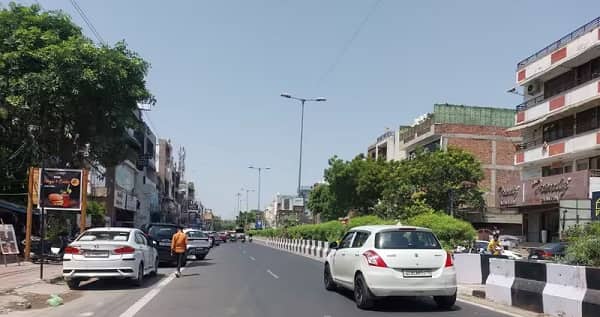
Harsh Vihar Delhi Quick Overview
| Feature | Details |
| Location | North East Delhi (Mandoli zone) |
| PIN Code | 110093 |
| Nearest Metro Stations | Dilshad Garden – Red Line; Johri Enclave – Pink Line |
| Railway Stations | Gokulpur Saboli; Behta Hazipur |
| Key Institutional Presence | Mandoli Prison Complex (Jail Road) |
| Key Employment Hub | New Mandoli Industrial Area |
| Hospitals | St. Stephen Hospital (accessible); Sparsh Multi-Speciality Hospital |
| Schools | Gyan Sarower Public School; India International Secondary School |
| Property Range | 1 BHK: ₹18–50L; 2 BHK: ₹23–80L; 3 BHK: ~₹1.1 Cr |
| Nearby Areas | Sunder Nagari, Mandoli, Bhopura, Gagan Vihar |
Harsh Vihar Delhi Connectivity – Metro, Roads, and Rail
Metro access from Harsh Vihar comes from the surrounding network rather than any station directly inside the locality. Dilshad Garden on the Red Line and Johri Enclave on the Pink Line are the two primary options, both reachable by auto, e-rickshaw, or DTC bus from the locality’s main roads. The Red Line at Dilshad Garden connects toward Kashmere Gate, New Delhi Railway Station, and onward through Delhi’s northern corridor, while the Pink Line at Johri Enclave opens the ring corridor toward Anand Vihar, Lajpat Nagar, and Majlis Park.
Gokulpur Saboli and Behta Hazipur railway stations provide suburban rail connectivity. Road access runs along Subhash Kansal Marg through the colony and connects to the broader North East Delhi road network linking toward Shahdara, Ghaziabad, and the GT Road corridor. DTC buses and e-rickshaws are the primary last-mile transport modes given the absence of a dedicated metro station within the locality.
The area’s proximity to the Delhi-UP border through the Bhopura corridor and the Mandoli-Ghaziabad axis makes it practical for residents who work across both sides of the boundary.
Harsh Vihar Delhi Landmarks and Key Facilities
The Mandoli Prison Complex is the locality’s most prominent institutional landmark — a large correctional facility that defines the Jail Road edge of Harsh Vihar and creates an unusual adjacency that shapes both the character and the security environment of the locality’s western boundary. The increased police presence around the jail complex is consistently cited by residents as a factor that improves local security despite the institutional association.
The New Mandoli Industrial Area provides local employment — a mixed industrial zone covering light manufacturing, warehousing, and small-scale units. This proximity keeps rental demand from industrial workers and small business employees consistent throughout the year.
Harsh Vihar Market serves daily grocery, clothing, and service needs within the colony. GDA Market extends the retail options for nearby residents. The broader Dilshad Garden commercial strip is accessible for larger retail and entertainment requirements. Rajiv Gandhi Government Hospital is referenced as a healthcare facility approximately 3 km from the locality’s core — a government hospital of significant scale for the North East Delhi belt.
Schools, Colleges, and Healthcare in Harsh Vihar
Gyan Sarower Public School serves the locality’s school-going population directly within Harsh Vihar. India International Secondary School is accessible for higher secondary requirements. Tuition centres and coaching institutes operate within the colony’s commercial strips for competitive exam preparation.
For healthcare, St. Stephen Hospital — one of Delhi’s established missionary hospitals with a reputation for quality care and affordable services — is accessible from the locality. Sparsh Multi-Speciality Hospital and Parakh Hospital Ghaziabad cover secondary and routine care requirements. The proximity to Ghaziabad’s hospital belt through the Bhopura-Ghaziabad road also gives residents access to Noida and Ghaziabad hospitals when Delhi-side options are congested.
Harsh Vihar Delhi Real Estate – Property Rates and Market
Harsh Vihar operates in Delhi’s affordable housing segment. 1 BHK properties are available in the ₹18 lakh to ₹50 lakh range, 2 BHK between ₹23 lakh and ₹80 lakh, and 3 BHK constructions around ₹1.1 crore. Independent houses and builder floors dominate the housing stock — the locality has minimal organised apartment society development, with most transactions involving standalone constructions on plotted land.
Monthly rentals in the broader zone are accessible — in the lower ranges for Northeast Delhi — which keeps occupancy high from the industrial worker and working-class family demographic. The locality has 10+ properties listed for sale and a smaller rental inventory at any given time, reflecting its predominantly owner-occupied character.
A specific factor shaping Harsh Vihar’s investment profile: the Mandoli Prison adjacency creates both a security benefit and a perception discount. Buyers who research beyond the jail proximity typically find the interior residential pockets reasonably well-maintained and community-oriented. The extension blocks further from Jail Road carry better residential ambience and are progressively more attractive as the locality’s overall infrastructure matures.
Harsh Vihar Delhi Environment – Industrial Adjacency, Green Spaces, and Air Quality
Harsh Vihar’s environmental picture is shaped primarily by its industrial proximity. The New Mandoli Industrial Area’s emissions and vehicle movement contribute to air quality challenges, particularly on the locality’s industrial-facing edge. Northeast Delhi’s seasonal pollution cycle — winter inversion, biomass burning in October-November — amplifies the baseline air quality picture to levels consistent with the broader zone.
Internal green spaces within Harsh Vihar are limited compared to more planned Delhi localities. Parks and open areas are small-scale and community-maintained rather than DDA-standard infrastructure. The colony’s tight build density means most residents rely on broader open areas in the zone for morning walks rather than internal park infrastructure.
FAQs About Harsh Vihar Delhi
Q: Which metro stations serve Harsh Vihar?
A: Dilshad Garden on the Red Line and Johri Enclave on the Pink Line are the nearest metro options. Both are accessible by auto or e-rickshaw. No metro station currently sits inside the locality.
Q: What is the significance of the Mandoli Prison Complex near Harsh Vihar?
A: The Mandoli Prison Complex is Delhi’s largest correctional facility, located along Jail Road at the western edge of Harsh Vihar. Its proximity generates consistent police patrolling and surveillance in the area, which residents report as a security benefit for the colony despite the institutional association.
Q: What are the property rates in Harsh Vihar?
A: 1 BHK properties range from ₹18 lakh to ₹50 lakh, 2 BHK from ₹23 lakh to ₹80 lakh, and 3 BHK around ₹1.1 crore. The locality is in Delhi’s affordable housing segment, making it accessible for first-time buyers and working-class families.
Q: What employment is accessible from Harsh Vihar?
A: The New Mandoli Industrial Area is the nearest employment zone. Dilshad Garden’s commercial strip and the broader Northeast Delhi industrial and commercial belt are accessible via Red Line metro at Dilshad Garden or road routes toward Ghaziabad and Sahibabad.
Q: Is Harsh Vihar a safe area to live in?
A: Residents rate safety at 3.5 out of 5 — the police presence around the Mandoli Prison area is noted as a positive security factor. The locality has a tight-knit community character that contributes to resident familiarity and informal safety. Interior pockets away from the Jail Road boundary are generally quieter and more residential in character.
 Saurav Mehra