
Nehru Vihar North Delhi is a residential sub-locality within the Mukherjee Nagar zone, carrying PIN code 110007, and neighbouring Gandhi Vihar, Timarpur, and the broader civil lines-university corridor that defines this part of North Delhi. The locality sits approximately 2 km from Delhi University’s North Campus and within practical reach of two Yellow Line metro stations — Vishwavidyalaya and GTB Nagar — placing it squarely in the academic and coaching hub ecosystem that makes Mukherjee Nagar one of Delhi’s most consistently rented residential zones.
Small by transaction volume — 4 properties to buy and 1 to rent on 99acres at any given time — but well-regarded as a residential address. Residents rate connectivity at 4.1 out of 5 and safety at 3.8, scores that reflect genuine Yellow Line metro access and an established North Delhi neighbourhood character, set against the traffic congestion and noise that any coaching-hub-adjacent zone inevitably generates.
| Feature | Details |
| Location | Mukherjee Nagar zone, North Delhi |
| PIN Code | 110007 |
| Nearest Metro | Vishwavidyalaya – Yellow Line (~2 km) |
| Additional Metro | GTB Nagar – Yellow Line; Model Town – Yellow Line |
| Railway Stations | Delhi Azadpur Railway Station (~3–4 km); Old Delhi Railway Station (~6 km) |
| Key Transit Points | Potala Ground (Majnu Ka Tila intercity buses); Majnu Ka Tila |
| Key Roads | GT Karnal Road; Outer Ring Road; Dr KB Hegdewar Marg |
| Airport Distance | IGI Airport – approx. 20 km |
| University | Delhi University North Campus (~2 km) |
| Key Hospitals | Nulife Hospital; Kaya Kalp Hospital; Vallabh Hospital; Sant Parmanand Hospital |
| Key Institutions | VPCI – Vallabhbhai Patel Chest Institute; Sant Nirankari Bhavan |
| Resident Rating | 4.1/5 connectivity; 3.8/5 safety |
Nehru Vihar North Delhi Connectivity – Yellow Line Metro and North Delhi Road Network
Vishwavidyalaya metro station on the Yellow Line is approximately 2 km from Nehru Vihar — the station named for Delhi University whose campus it serves, and the locality’s primary daily metro gateway. GTB Nagar station on the same Yellow Line is at comparable distance in the other direction. Between the two stations, Nehru Vihar residents have flexible Yellow Line access depending on which block they live in and which direction they’re commuting — southward through Civil Lines, Kashmere Gate, Chandni Chowk, New Delhi, Rajiv Chowk, and the full South Delhi and Gurugram corridor, or northward through Azadpur, Adarsh Nagar, and Samaypur Badli.
Potala Ground at Majnu Ka Tila functions as a key transit interchange point within easy reach of the locality — DTC buses, intercity buses to Chandigarh, Himachal Pradesh, and Uttarakhand, and the general bus network converge here alongside the Tibetan enclave’s distinctive cultural character. Delhi Azadpur Railway Station at 3 to 4 km and Old Delhi Railway Station at approximately 6 km cover intercity rail needs.
GT Karnal Road runs along the eastern boundary of the broader Mukherjee Nagar-Nehru Vihar zone, providing road connectivity northward toward Haryana and southward toward Ring Road. Dr KB Hegdewar Marg connects westward toward Netaji Subhash Place at approximately 10 km — the primary North Delhi office hub accessible by road or Yellow Line metro. Outer Ring Road extends south-north arterial access.
Nehru Vihar North Delhi Landmarks and Key Facilities
Delhi University North Campus — at approximately 2 km — is the neighbourhood’s primary institutional anchor. The campus includes iconic institutions: Hindu College, Miranda House, Kirori Mal College, Ramjas College, St. Stephen’s College, and Delhi School of Economics. The university’s scale and its student population of tens of thousands directly shapes Nehru Vihar’s rental market, commercial strip character, and daily life energy.
The UPSC and civil services coaching ecosystem of Mukherjee Nagar is the second defining institutional feature. Drishti IAS, Vision IAS, Shankar IAS, and dozens of smaller coaching institutes are all within easy walking or auto distance from Nehru Vihar — a coaching density that keeps the locality’s rental demand perpetually supported regardless of property market cycles. Competitive exam aspirants from Bihar, UP, Rajasthan, Haryana, and Uttarakhand form the dominant tenant demographic.
Majnu Ka Tila — the Tibetan enclave — is a distinctive cultural landmark accessible within short auto distance. Its Tibetan restaurants, momos, butter tea, monastery, and handicraft shops make it one of Delhi’s most culturally specific neighbourhoods and a regular food outing destination for Nehru Vihar residents.
Enquiry Section of Delhi University — the administrative reference office — is cited as a key institutional landmark in the locality’s immediate zone. Kamla Nagar Market, accessible from the university area, is one of Delhi’s most popular youth shopping destinations for fashion, accessories, and food.
Schools, Healthcare, and Real Estate in Nehru Vihar
Delhi University’s affiliated colleges are the most significant educational institutions accessible from Nehru Vihar. Municipal Primary Girls School is cited within the locality’s immediate area. The broader Mukherjee Nagar zone has MCD schools and government secondary schools alongside the coaching institute concentration.
Nulife Hospital is the most directly cited hospital for Nehru Vihar. Kaya Kalp Hospital, Vallabh Hospital, and Sant Parmanand Hospital cover secondary and routine care within the zone. Vallabhbhai Patel Chest Institute (VPCI) — the government respiratory speciality hospital associated with Delhi University — is within the accessible area for respiratory care. Adarsh Hospital, Hans Charitable Hospital, and Durga Hospital extend the healthcare network within the broader zone.
The property market in Nehru Vihar is thin in transaction volume but consistent in character. At 4 properties to buy and 1 to rent, it is a primarily owner-occupied community where the real market activity is rentals — particularly budget rooms, shared accommodations, and small 1 BHK units for UPSC aspirants and DU students. The Kalyan Vihar zone adjacent to Nehru Vihar shows average apartment rates of ₹17,550 per sq ft, which gives a reference point; Nehru Vihar as a sub-locality trades at the neighbourhood level around comparable or slightly lower values given its tighter lane character versus broader Mukherjee Nagar addressing.
Environment – Coaching Hub Energy, Tree-Lined Streets, and Air Quality
Nehru Vihar’s environmental character is split between two realities. The DU adjacency brings genuine green quality — the Delhi University campus maintains extensive tree cover, wide avenues, and open grounds that improve air quality and create spatial relief for the surrounding residential lanes. Residents of Nehru Vihar and Kalyan Vihar consistently describe the streets as green and the neighbourhood as pleasant, specifically citing this tree cover as a differentiator.
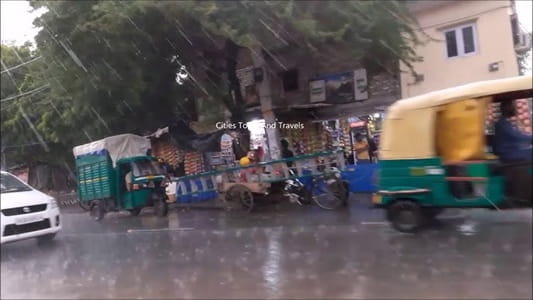
The coaching hub economy imposes a different energy: peak traffic during morning and evening coaching institute timings, crowds on narrow commercial lanes, auto and e-rickshaw congestion near the Mukherjee Nagar market, and the noise of a locality that never fully quiets down. Traffic congestion is the most consistently cited friction, following closely by parking pressure near the commercial zones.
Air quality follows North Delhi’s GT Karnal Road industrial corridor pattern — Wazirpur and Azadpur industrial areas at approximately 5 to 7 km contribute to the baseline particulate load. Winter inversions bring the standard October to January deterioration. The DU campus green cover provides marginal but genuine mitigation for the residential blocks adjacent to the university.
FAQs About Nehru Vihar North Delhi
Q1. Which metro stations serve Nehru Vihar?
Vishwavidyalaya on the Yellow Line is approximately 2 km away — the DU metro station and the locality’s primary access. GTB Nagar on the same line provides a second option. The Yellow Line gives single-corridor access to Civil Lines, Connaught Place, AIIMS, Saket, and Gurugram southward, and to Azadpur and Samaypur Badli northward.
Q2. Why is the coaching hub proximity important for Nehru Vihar?
Mukherjee Nagar is India’s most concentrated UPSC and civil services coaching ecosystem. The thousands of aspirants who come from across India to prepare here need budget accommodation, driving constant rental demand for Nehru Vihar’s 1 BHK and shared configurations. This demand is structurally consistent regardless of real estate cycles.
Q3. What is Majnu Ka Tila and how far is it?
Majnu Ka Tila is Delhi’s Tibetan enclave on the Yamuna’s western bank — a cluster of Tibetan restaurants, momos shops, monastery, and handicraft stores. It is within easy auto distance from Nehru Vihar and is a regular food and cultural destination for residents and students.
Q4. Which hospitals serve Nehru Vihar?
Nulife Hospital is the most directly cited facility. Kaya Kalp Hospital, Vallabh Hospital, Sant Parmanand Hospital, and VPCI (for respiratory care) cover the zone’s healthcare requirements. The broader North Delhi hospital belt including Hindu Rao Hospital and GTB Hospital is accessible via Yellow Line metro.
Q5. How is the residential character of Nehru Vihar?
A settled, community-oriented neighbourhood with long-term residents alongside a constantly rotating student and aspirant rental population. Green streets from the DU adjacency, active local markets, and Yellow Line metro access at 2 km are the positives. Traffic congestion during coaching hours and parking pressure near the commercial area are the known friction points.