
Splash a bit of turmeric-heavy curry or a squeeze of lemon onto a marble kitchen floor, and within minutes you might notice a faint, permanent mark that no amount of scrubbing ever fully removes. Try the exact same thing on granite, and it wipes away without a trace. This single difference genuinely captures why choosing between these two natural stones deserves considerably more thought than simply picking whichever one looks prettier in the showroom, especially given how differently they’ll actually perform in your specific rooms over the years ahead.
Here’s why this decision genuinely matters beyond aesthetics: both marble and granite are natural stone, both are genuinely durable in their own way, but they come from fundamentally different geological processes that give them dramatically different real-world performance. Understanding exactly where each stone genuinely excels, and where each falls short, helps you choose based on how you actually live rather than pure visual appeal alone.
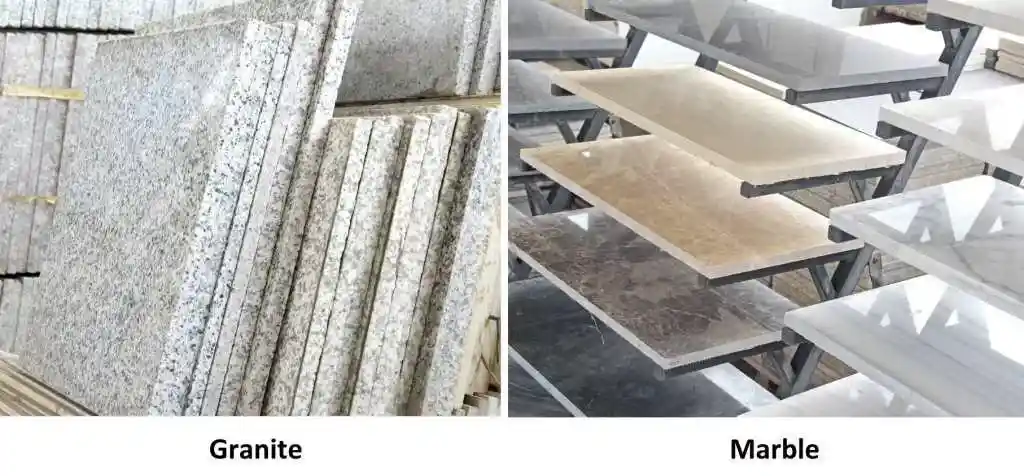
Why Their Geological Origins Genuinely Explain Everything Else
This distinction genuinely underlies every practical difference between these stones. Granite is an igneous rock, formed through the slow crystallisation of magma deep beneath the earth’s surface, composed primarily of quartz, feldspar, and mica, creating a genuinely dense, hard material. Marble, by contrast, is a metamorphic rock derived from limestone subjected to intense heat and pressure, consisting mainly of calcite or dolomite crystals, giving it a genuinely softer, more porous structure than granite.
This single origin story genuinely explains why granite resists scratches and stains so much better, its crystalline structure formed under extreme conditions makes it genuinely dense, while marble’s limestone origin leaves it naturally more porous and vulnerable to absorbing whatever liquids come into contact with it.
Why Granite Genuinely Wins on Hardness and Scratch Resistance
This is where the numbers genuinely tell a clear story. Granite carries a Mohs hardness rating of 6 to 7, compared to marble’s considerably softer rating of around 3, and this gap translates directly into everyday performance. Granite genuinely resists scratches, chips, and daily wear far more effectively, standing up to heavy foot traffic, dragged furniture, and dropped kitchen utensils without showing damage the way marble genuinely would under identical conditions.
This hardness advantage is precisely why granite has become the preferred choice for kitchens and high-traffic zones specifically, marble’s softer surface can genuinely get scratched from something as simple as cutting directly on the counter, a genuine practical concern that makes experts consistently recommend granite over marble for kitchen countertops and flooring alike.
Why Marble Genuinely Etches From Everyday Kitchen Acids
This is a genuinely important, often overlooked distinction worth understanding clearly. Because marble is porous, exposing it to acidic liquids, curry, lemon juice, vinegar, wine, genuinely causes a chemical reaction that etches and dulls its surface permanently, leaving marks that polishing alone often can’t fully reverse. Granite, being considerably denser, doesn’t soak up these liquids nearly as readily, making it genuinely far more forgiving for anyone who’s occasionally messy while cooking.
This etching vulnerability genuinely extends to heat exposure too, marble can be susceptible to damage even from contact with hot pots and pans, while granite genuinely handles heat exposure without issue, another genuine reason experts consistently steer kitchen applications toward granite rather than marble.
Why Marble Genuinely Remains the Preferred Choice for Aesthetics and Luxury
It’s genuinely worth being fair to marble here rather than assuming granite wins on every single measure. Marble’s elegant veining, natural shine, and luxurious appeal genuinely make it the preferred choice for homeowners specifically prioritising visual sophistication over pure practicality. Marble also stays genuinely cooler underfoot than granite in most conditions, a real comfort advantage during Indian summers, and it reflects light beautifully, making living rooms and bedrooms feel brighter and more spacious.
This aesthetic advantage genuinely translates into resale perception too, marble flooring is widely associated with premium interiors and luxury homes, and in premium projects specifically, both marble and granite can boost resale value by 8-12%, reflecting how strongly Indian buyers still associate natural stone with quality construction regardless of which specific stone you’ve chosen.
Why Maintenance Requirements Genuinely Differ Considerably
This is genuinely where daily practicality separates these two options most clearly. Granite requires remarkably low upkeep, a simple damp cloth and mild soap handle regular cleaning, and it rarely needs re-polishing given its naturally dense, non-porous surface. Marble genuinely demands considerably more ongoing attention, requiring regular sealing to prevent staining and periodic professional polishing to maintain its characteristic shine, skipping this maintenance genuinely leads to a dull, marked floor within just a few years.
This maintenance gap genuinely matters for busy households specifically, if you want beautiful natural stone flooring without adding another item to your regular home maintenance routine, granite’s low-upkeep nature genuinely makes it the more practical everyday choice, while marble rewards owners genuinely willing to invest ongoing care into preserving its appearance.
Why Combining Both Stones Has Genuinely Become a Popular Approach
Many Indian homeowners in 2026 have genuinely found a smart middle ground, using granite specifically in high-traffic zones, kitchens, hallways, staircases, while reserving marble for formal spaces like living rooms and bedrooms where its luxurious appearance genuinely matters more than raw durability. This combined approach genuinely balances practicality with aesthetics, letting each stone do what it genuinely does best rather than forcing one material to handle every room’s distinct demands equally well.
Frequently Asked Questions
Q1. Which stone is genuinely better specifically for kitchen flooring, granite or marble?
Granite genuinely wins for kitchens, its superior heat resistance, stain resistance, and scratch resistance make it considerably more forgiving for daily cooking spills and heat exposure, while marble’s porous surface genuinely risks permanent etching from common kitchen acids like lemon and curry.
Q2. Does marble genuinely require more maintenance than granite over time?
Yes, genuinely significantly more, marble needs regular sealing and periodic professional polishing to prevent staining and maintain its shine, while granite’s dense, non-porous surface requires just simple damp cloth cleaning and rarely needs re-polishing.
Q3. Is it genuinely a good idea to combine granite and marble flooring within the same home?
Yes, genuinely, many homeowners use granite in high-traffic zones like kitchens and hallways while reserving marble for formal living areas and bedrooms, balancing durability where it’s needed most with luxurious aesthetics where visual appeal genuinely matters more.
Q4. Which stone genuinely keeps rooms cooler in Indian summer heat, granite or marble?
Marble generally stays cooler underfoot in most conditions, particularly in dry heat, though granite genuinely handles humidity and tropical conditions well too, both offer natural cooling benefits, making either a reasonable choice for India’s hot climate depending on your specific regional weather patterns.