
Every Indian homeowner has genuinely faced this exact moment: standing in a paint shop deciding between shade cards, then walking past a wallpaper showroom next door with gorgeous textured patterns that make plain painted walls suddenly look boring. This decision genuinely deserves more thought than picking whatever looks nicer that afternoon, because the actual long-term math genuinely surprises most people once you factor in how many times you’ll be redoing paint over the same years a quality wallpaper simply sits there looking good.
Here’s why this comparison genuinely matters beyond aesthetics: in Indian weather, even good quality paint typically needs repainting every 3 to 7 years, while a properly installed, quality wallpaper can genuinely last 10 to 15 years without fading or peeling. Understanding this genuine long-term trade-off, rather than focusing purely on which costs less to buy today, helps you choose based on your actual total cost of ownership rather than a snapshot comparison at the shop counter.
Why Upfront Cost Genuinely Favours Paint, But Only Initially
This is genuinely where most people stop their comparison, and it’s exactly why paint feels like the obvious cheaper choice. Standard interior paint typically costs ₹12 to ₹35 per square foot including material and labour, while wallpaper starts considerably higher, often ₹50 to ₹150 or more per square foot excluding installation charges. On this measure alone, paint genuinely wins, and for anyone renovating on a tight immediate budget, this upfront gap genuinely matters.
But this comparison genuinely tells only half the story, since paint’s lower upfront cost comes paired with a considerably shorter lifespan requiring repeated future spending, while wallpaper’s higher initial investment often means you’re genuinely done paying for that wall for over a decade.
Why the Genuine Long-Term Math Tells a Different Story
This is worth calculating properly rather than assuming upfront price settles the question. Standard emulsion paint in Indian homes typically lasts just 3 to 5 years before needing a fresh coat, sometimes even sooner in humid conditions, near kitchens, or in rooms with children. Over a 15-year period, this means repainting the same wall 2 to 5 times, with cumulative costs genuinely reaching ₹6,000 to ₹42,000 for a single wall depending on paint quality and how often environmental conditions force earlier repainting.
A quality non-woven wallpaper, correctly installed in an air-conditioned interior, genuinely lasts 10 to 15 years without fading or peeling, meaning you pay once, roughly ₹7,200 to ₹61,200 for a comparable wall, and you’re genuinely finished for well over a decade. This math genuinely shifts depending on your specific paint quality and wallpaper choice, but the underlying principle holds, wallpaper’s higher upfront cost often evens out or even beats paint’s cumulative repainting expense over the long run.
Why Maintenance Reality Genuinely Surprises Most People
This is genuinely worth clarifying since a common misconception assumes wallpaper is delicate and hard to maintain, while paint is simple and forgiving. In practice, it’s genuinely more nuanced. Paint marks and scuffs show easily, and touching up damaged spots genuinely requires matching your original paint batch, something that often becomes practically impossible after a few years as formulations and colour batches change.
Quality non-woven and vinyl wallpapers, by contrast, are genuinely wipeable, marks clean off with a simple damp cloth, and scuffs or dents often stay invisible on textured surfaces. Modern wallpaper is genuinely more practical for daily maintenance than most people assume, though it’s worth noting wallpaper isn’t recommended in splash zones without additional protective finishing, making bathrooms and areas prone to direct water splash genuinely better suited to paint regardless of these maintenance advantages elsewhere.
Why Design Flexibility Genuinely Favours Wallpaper
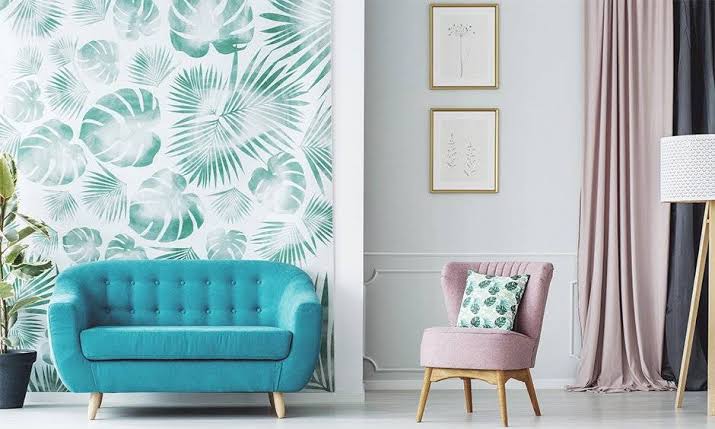
This is where wallpaper genuinely pulls ahead without much debate. Wallpaper offers an extensive variety of patterns, textures, flocked, metallic, grasscloth, embossed, 3D finishes, and full murals that are genuinely difficult or impossible to replicate with paint alone. For homeowners wanting a genuinely distinctive, designer-looking accent wall or a room with real visual depth, wallpaper delivers options paint simply cannot match regardless of how skilled your painter is.
Wallpaper’s thickness and pattern also genuinely conceals minor wall imperfections effectively, providing a smooth, flawless finish even on less-than-perfect surfaces, while paint tends to highlight these same imperfections, requiring more thorough wall preparation to achieve a genuinely smooth result.
Why Paint Genuinely Remains Better for Certain Practical Situations
It’s genuinely worth being fair to paint here rather than assuming wallpaper wins on every measure. Paint offers unlimited colour choice and creates a clean, seamless look that suits homes prioritising simplicity or planning to sell soon, since neutral paint colours are generally considered safer for resale, they don’t alienate potential buyers the way a bold, personalised wallpaper pattern genuinely might. Paint also handles installation and removal genuinely more simply, without needing the specialised skill wallpaper application requires, and it dries and gets touched up considerably faster when quick, minor repairs are needed.
For rooms exposed to genuine moisture, kitchens, bathrooms, or areas with young children creating regular messes, paint’s simpler cleaning and touch-up process, particularly washable finishes from trusted brands, genuinely makes more practical sense than wallpaper despite its aesthetic limitations.
Making the Genuinely Smart Room-by-Room Decision
Rather than choosing one option for your entire home, many Indian homeowners in 2026 genuinely mix both strategically. Wallpaper works particularly well in living rooms, bedrooms, and feature walls where style matters most and moisture exposure stays genuinely low, while paint remains the more practical choice for kitchens, bathrooms, and high-traffic hallways where easy cleaning and quick touch-ups genuinely matter more than elaborate pattern or texture.
Frequently Asked Questions
Q1. Is wallpaper genuinely more expensive than paint over the long term, or does it actually work out cheaper?
It genuinely depends on your specific timeframe, paint has a lower upfront cost but needs repainting every 3 to 7 years, while quality wallpaper costs more initially but can last 10 to 15 years, meaning over a decade or more, wallpaper often works out comparable to or even cheaper than repeated repainting.
Q2. Can wallpaper genuinely be cleaned as easily as painted walls, or does it stain more easily?
Modern, quality non-woven and vinyl wallpapers are genuinely wipeable, marks clean off with a damp cloth similarly to painted walls, though wallpaper isn’t recommended in direct splash zones like inside a shower without additional protective finishing.
Q3. Which option genuinely suits a rental property or a home I plan to sell soon?
Paint generally works better here, neutral paint colours are considered safer for resale since they don’t alienate potential buyers, while bold or highly personalised wallpaper patterns can genuinely be harder to remove and might not suit the next owner’s taste.
Q4. Is it genuinely a good idea to use wallpaper in a humid room or one prone to moisture?
Not ideal without extra precautions, wallpaper performs best in genuinely dry, air-conditioned interiors, and while quality options handle moderate humidity reasonably well, direct moisture exposure or splash zones are genuinely better suited to washable paint finishes instead.