
Walk into any modern Indian office, and you’ll genuinely spot a distinctive pattern overhead, a grid of neat, evenly spaced tiles rather than one continuous smooth surface. Walk into a well-designed home living room instead, and the ceiling genuinely looks seamless, no visible joints, no removable panels, just a clean, continuous surface. These two approaches genuinely serve very different purposes, and understanding exactly why offices overwhelmingly choose grid systems while homes lean toward gypsum matters before you pick either for your own specific space.
Here’s why this comparison genuinely deserves careful thought rather than defaulting to whichever your contractor happens to install more often: grid and gypsum ceilings genuinely differ in one fundamental, practical way that shapes everything else, one lets you lift individual tiles for instant access to wiring and ductwork above, while the other creates a fixed, seamless surface requiring actual demolition to access anything hidden behind it. Knowing which access requirement genuinely matters for your space determines which system makes more sense.
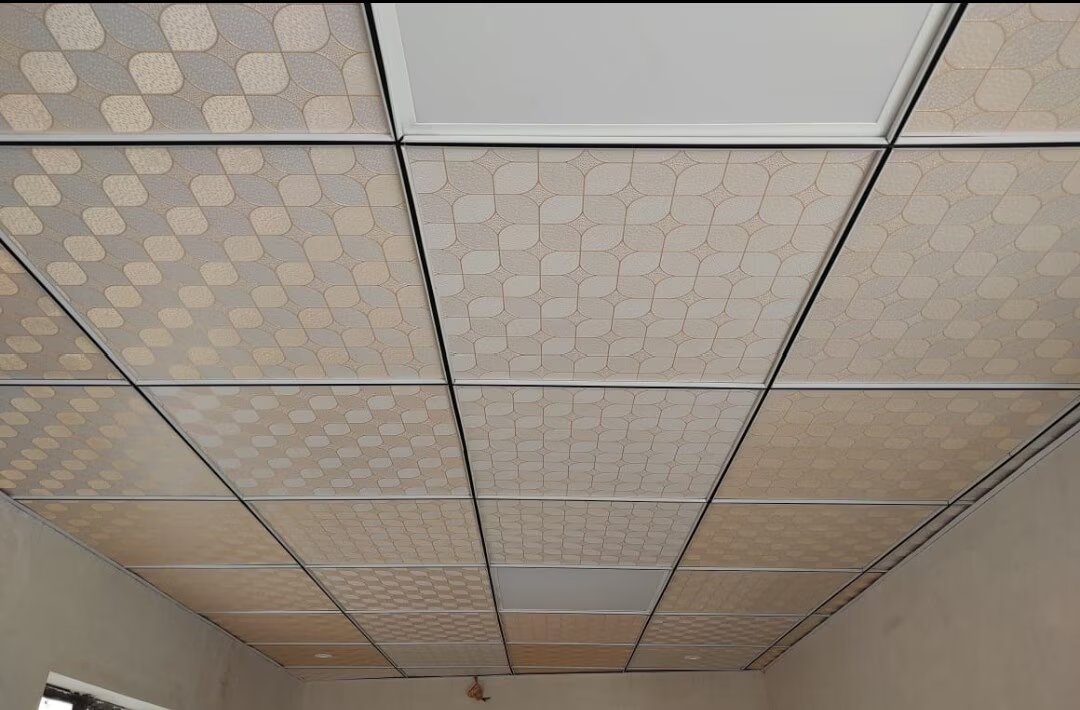
Why Grid Ceilings Genuinely Excel at Providing Easy Access
This is genuinely grid ceiling’s defining, most practical advantage. A grid ceiling uses a suspended metal frame, typically an Armstrong-style T-bar system, holding individual drop-in tiles that rest within the grid rather than being permanently fixed. This construction genuinely means any single tile can be lifted out instantly whenever electricians, AC technicians, or plumbers need to access wiring, ductwork, or pipes running above the ceiling, without requiring any demolition or repair work afterward.
This genuine accessibility advantage is precisely why grid ceilings dominate commercial and office spaces, buildings with complex, frequently-serviced infrastructure above the ceiling genuinely benefit enormously from this instant access, since maintenance teams can address an issue in minutes rather than needing to cut open and later repair a fixed gypsum surface every single time something needs attention.
Why Gypsum Genuinely Delivers the Smoother, More Premium Residential Finish
It’s genuinely worth being fair to gypsum here, since it remains the dominant choice for homes for genuinely sound reasons. Gypsum board ceilings offer a smooth, consistent, seamless finish without the visible grid lines and joint patterns that inherently come with a modular tile system. This genuinely matters for residential aesthetics, where homeowners typically want their living room or bedroom ceiling to look like a continuous, elegant surface rather than an obviously segmented, office-style grid pattern.
Gypsum also genuinely supports considerably more sophisticated design elements that residential interiors often want, cove lighting, multi-level layered designs, and curved or geometric patterns that a fixed grid tile system simply cannot replicate with the same visual elegance, making gypsum genuinely the preferred choice whenever aesthetic sophistication matters more than practical access requirements.
Understanding the Genuine Cost Comparison
Pricing genuinely runs fairly close between these two options, though grid tends to sit slightly lower. Grid ceilings typically cost ₹65 to ₹95 per square foot, while gypsum board ceilings run ₹60 to ₹150 per square foot depending on brand and design complexity. This means the genuine cost difference between the two isn’t usually the deciding factor, grid’s practical access advantage and gypsum’s aesthetic superiority genuinely matter more than any modest price gap between them.
Adding cove lighting or LED profile integration genuinely adds ₹30 to ₹55 per square foot to either system, though gypsum’s smoother, fixed surface generally accommodates these decorative lighting elements more elegantly than a grid system’s inherently modular, tile-based construction allows.
Why Grid Ceilings Genuinely Suit Spaces With Complex Overhead Infrastructure
This is genuinely worth understanding as the core decision factor beyond pure aesthetics. Office buildings, commercial spaces, and any room with extensive overhead wiring, HVAC ductwork, sprinkler systems, or plumbing that genuinely needs periodic access, servers rooms, IT infrastructure spaces, commercial kitchens, all benefit enormously from grid’s lift-and-access design. For a home, this level of frequent overhead maintenance access is genuinely rare, most residential ceilings hide relatively simple electrical wiring that doesn’t need regular servicing, making gypsum’s fixed, seamless approach genuinely more practical for typical household needs.
Why Installation Speed Genuinely Favours Grid Systems
This matters for anyone working within a tight renovation timeline. Grid ceilings genuinely install faster than gypsum in most cases, since the modular tile system requires less finishing work, no jointing compound, sanding, or putty application that gypsum genuinely demands before it’s ready for paint. This installation speed advantage genuinely matters more for commercial projects needing quick turnaround, offices that can’t afford extended downtime, or spaces where minimising disruption during installation genuinely takes priority over achieving the smoothest possible aesthetic finish.
Why Durability and Fire Resistance Genuinely Favour Gypsum for Most Applications
Gypsum board ceilings are genuinely dimensionally stable, fire-resistant, and don’t crack over time the way older POP alternatives sometimes do, making gypsum genuinely a reliable long-term choice for residential fire safety and structural stability. Grid ceiling tiles, depending on their specific material, mineral fibre, metal, or PVC, genuinely vary in their fire resistance and durability characteristics, meaning verifying your specific tile material’s fire rating matters if this is a genuine safety priority for your particular space, particularly in commercial buildings where fire code compliance is genuinely mandatory rather than optional.
Frequently Asked Questions
Q1. Is a grid ceiling genuinely suitable for a residential living room, or is it purely for offices?
Grid ceilings can technically work in homes, but they’re genuinely less common residentially since their visible tile pattern and joint lines don’t match the smooth, seamless aesthetic most homeowners prefer, making gypsum genuinely the more typical choice for living rooms and bedrooms.
Q2. Why do offices genuinely prefer grid ceilings over gypsum despite gypsum’s smoother finish?
Offices genuinely prioritise easy access to wiring, HVAC ductwork, and other overhead infrastructure that needs frequent maintenance, and grid ceiling’s lift-out tile design provides this instant access without demolition, an advantage that genuinely outweighs gypsum’s aesthetic superiority in a functional commercial setting.
Q3. Does a grid ceiling genuinely cost less than a gypsum ceiling for the same room size?
Grid ceilings typically cost slightly less, ₹65 to ₹95 per square foot compared to gypsum’s ₹60 to ₹150 range, though the difference isn’t usually dramatic enough to be the deciding factor, practical access needs and aesthetic preference genuinely matter more than this modest cost gap.
Q4. Can I genuinely add cove lighting and decorative elements to a grid ceiling the way I can with gypsum?
Grid ceilings can accommodate some lighting integration, but gypsum’s fixed, seamless surface genuinely handles sophisticated decorative elements like cove lighting and multi-level designs more elegantly, making gypsum the better choice specifically when elaborate residential design ambitions matter more than modular access convenience.