
Ashok Vihar Delhi is one of North Delhi’s most established residential addresses, and its position in the real estate market today reflects decades of consistent demand rather than any recent hype cycle. Divided into four phases spread across North West Delhi, this locality carries PIN code 110052 and sits at a geographic crossroads that few comparable North Delhi colonies can match — flanked by GT Karnal Road to the east, Ring Road to the south, and the Wazirpur Industrial Area to the immediate west. Each of those borders tells you something different about who lives here and why.
The phases themselves have distinct characters. Phase 1 is the oldest and most settled, with established independent floors and a market strip that predates most of what surrounds it. Phases 2 and 3 followed with DDA housing stock that has since been heavily renovated and upgraded. Phase 4, the newest addition, carries a slightly more modern residential profile. Sub-localities like Sawan Park, Nimri Colony, Keshav Puram, and Wazirpur Village sit within or immediately adjacent to the Ashok Vihar belt.
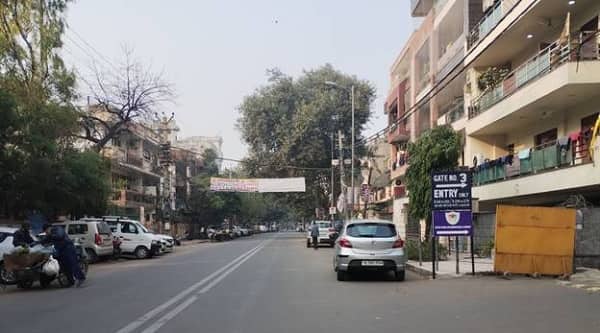
Ashok Vihar Delhi Quick Overview
| Feature | Details |
| Location | North West Delhi |
| PIN Code | 110052 |
| Current Metro Access | Keshav Puram (Red Line), Kanhaiya Nagar (Red Line), Azadpur (Pink Line + Yellow Line), Netaji Subhash Place (Pink Line) |
| Phase 4 Metro (Ashok Vihar Station) | Under construction – Magenta Line, expected Late 2027 |
| Nearest Railway Stations | Sarai Rohilla – approx. 5 km; Azadpur – approx. 4 km |
| IGI Airport Distance | Approx. 21–23 km via Mahatma Gandhi Road |
| Avg. Apartment Rate | ₹14,400 – ₹21,100 per sq ft (varies by phase) |
| Key Roads | GT Karnal Marg, Ring Road, Outer Ring Road |
| Notable Landmarks | Deep Market, Central Market Phase 1, Sawan Park, Jivodaya Hospital |
| Nearby Employment Hubs | Netaji Subhash Place, Wazirpur Industrial Area, Lovekush Business Park |
Ashok Vihar Connectivity – Roads, Metro, and Rail
Road connectivity is Ashok Vihar’s most immediate strength. GT Karnal Marg runs along the eastern edge, giving direct access to Old Delhi, Civil Lines, and eventually the GT Road corridor northward. Ring Road to the south hooks into the city’s arterial network quickly. Outer Ring Road is accessible without much deviation, and the Shalimar Bagh Flyover eases movement toward Pitampura and Rohini significantly. For daily commuters heading toward Connaught Place or Karol Bagh, the road options are multiple — which matters more than it sounds in a city where a single bottleneck can destroy a morning schedule.
Metro access currently comes from three directions. The Red Line serves Ashok Vihar through Keshav Puram and Kanhaiya Nagar stations, both within practical reach of the locality’s core. Azadpur Metro Station — an interchange for both the Pink Line and the Yellow Line — sits around 2 to 3 km away and connects residents toward Connaught Place, IGI Airport (via the Yellow Line), and the Majlis Park–Lajpat Nagar corridor on the Pink Line. Netaji Subhash Place on the Pink Line provides another interchange option closer to the commercial belt.
The bigger metro development is still pending. Ashok Vihar has a dedicated station planned on the Phase 4 Magenta Line extension running from Majlis Park toward RK Ashram Marg. As of 2026, this section — covering stations from Majlis Park through Azadpur, Ashok Vihar, Derawal Nagar, and onward — is under construction with a completion expected in late 2027. When operational, it will give Ashok Vihar a direct metro stop for the first time and connect residents straight to the Magenta Line’s south Delhi and Noida network. It is worth noting clearly: the Ashok Vihar metro station on this corridor is not yet open, and current metro access requires reaching Azadpur, Keshav Puram, or Kanhaiya Nagar.
For rail travel, Sarai Rohilla Railway Station sits approximately 5 km away and handles several intercity trains. Delhi Azadpur Railway Station is closer at around 4 km. Hazrat Nizamuddin and New Delhi Railway Station are both reachable within 45 minutes to an hour by road or metro depending on traffic.
Ashok Vihar Landmarks and Key Facilities
The Deep Market in Ashok Vihar Phase 1 is the neighbourhood’s most recognisable retail address. It handles everything from daily grocery runs to clothing, electronics, and eating out — dense, busy, and functional in the way that only a market that has been in continuous use for 40-plus years becomes. The Central Market in Phase 1 similarly caters to core household needs and has a long-standing reputation in the area.
Netaji Subhash Place, accessible from the locality in roughly 15 minutes, functions as the primary commercial hub serving Ashok Vihar’s working population. It concentrates IT offices, retail banks, restaurants, and business services in one compact district. For shopping mall access, Parsvnath Mall at Inderlok, DT City Centre, and Pacific Mall are all within 3 km — enough variety that residents rarely feel the need to travel to South Delhi for retail.
The Ashok Vihar Tomb at Sawan Park is a lesser-known but genuine historical site within the locality — a Mughal-era structure sitting incongruously inside what is otherwise a dense residential colony. Most residents pass it daily without necessarily registering its age. It is one of those specific, only-here details that makes the locality more layered than a straightforward DDA township.
Wazirpur Industrial Area, while not a landmark in the conventional sense, shapes Ashok Vihar’s character meaningfully. It sits immediately to the west and northwest, concentrating manufacturing, small-scale industry, and warehousing. This drives employment within walking distance for a segment of residents, but also contributes to the air quality and heavy vehicle traffic issues the area faces.
Schools, Colleges, and Healthcare in Ashok Vihar
Education options within and immediately around Ashok Vihar are solid. DAV Public School serves the locality’s school-going population across phases. Kulachi Hansraj Model School and Maharaja Agarsain Public School add further options within the same catchment area. The proximity to Delhi University’s North Campus — roughly 4 to 5 km away — makes Ashok Vihar a practical residential choice for students attending Kirori Mal College, Hindu College, or Satyawati College. Lakshmibai College in nearby Keshav Puram drives significant rental demand specifically from female students, a fact that landlords in Phase 3 and Sawan Park have known and benefited from for years.
Siddhi Vinayak Group of Colleges adds higher education options closer to home. Satyawati College, accessible via GT Karnal Road, serves commerce and arts students from the surrounding neighbourhood.
Healthcare is well covered without being spectacular. Fortis Hospital and NKS Super Speciality Hospital are within 3 km, handling secondary and speciality care needs. Deep Chand Bandhu Hospital is a government facility within the locality. Jivodaya Hospital has been part of Phase 1’s social infrastructure for decades. Maharaja Agrasain Hospital and Citizen Hospital provide further options. For tertiary care requirements, Rajiv Gandhi Super Speciality Hospital and Max Hospital at Pitampura are accessible via metro or road within 30 minutes.
Ashok Vihar Real Estate – Property Rates and Investment Outlook
Property values in Ashok Vihar vary noticeably across phases. Phase 3 commands the highest rates, with apartments ranging between ₹8,888 and ₹26,900 per sq ft depending on floor, condition, and pocket. The overall Ashok Vihar average sits around ₹14,400 to ₹21,100 per sq ft, modestly below the Delhi-wide average of approximately ₹18,200 per sq ft — which is exactly why certain buyer profiles find it attractive. Phase 1 apartments have seen some price correction recently, with approximately a 4.9% dip over the past year, while Phase 3 has held steadier owing to college rental demand and road access.
Rental yields are driven primarily by two groups: students targeting North Campus institutions and professionals working in Netaji Subhash Place or the Wazirpur industrial and commercial belt. Monthly rentals across phases currently range from roughly ₹11,000 for smaller units to ₹67,800 for larger configurations. The pending Magenta Line metro station, once operational, is expected to meaningfully re-price property in immediate proximity — currently the lack of a dedicated metro stop within walking distance is the most cited buyer hesitation for the locality.
Ashok Vihar Environment – Green Spaces and Air Quality
Ashok Vihar has more green infrastructure than most North Delhi colonies of similar density. Multiple DDA parks are maintained across phases — Phase 2 has several including district parks and open green belts along the railway line boundary. Sawan Park, both as a sub-locality name and as a physical green space, gives Phase 3 residents a place that is genuinely used — for morning walks, children, and informal gatherings. Ashoka Garden and Lekhram Park serve Phase 1 residents. The Vaishnavi nursery and recreational space project in Phase 3 has been progressing toward completion, which will add further organised green space to that pocket.
The environmental trade-off is real and should not be understated. Proximity to the Wazirpur Industrial Area — handling metalworking, rolling shutters, crockery manufacturing, and assorted light industry — means particulate levels in the western pockets of Ashok Vihar run consistently higher than in the residential interior. GT Karnal Road and Ring Road bring heavy vehicle traffic whose emissions compound the industrial air quality picture. Waterlogging during monsoon, particularly in the market areas, is a recurring issue that residents have flagged for years without resolution. These are the known frictions of living in a locality that is both industrial-adjacent and high-density.
FAQs About Ashok Vihar Delhi
Q: Which metro stations serve Ashok Vihar currently?
A: Keshav Puram and Kanhaiya Nagar on the Red Line are the nearest active metro stations. Azadpur on the Pink and Yellow Lines is 2 to 3 km away. A dedicated Ashok Vihar station on the Magenta Line Phase 4 extension is under construction and expected by late 2027.
Q: What are the current property rates in Ashok Vihar?
A: Rates vary by phase. Phase 3 apartments range from around ₹8,888 to ₹26,900 per sq ft. The overall locality average sits between ₹14,400 and ₹21,100 per sq ft. Monthly rentals range from ₹11,000 to ₹67,800 depending on unit size and phase.
Q: Is Ashok Vihar good for students?
A: Yes. Proximity to Delhi University North Campus institutions and Lakshmibai College in nearby Keshav Puram makes it a practical and affordable residential base for students. Rental demand from this group is consistent across Phases 2, 3, and Sawan Park.
Q: What is the nearest railway station to Ashok Vihar?
A: Sarai Rohilla Railway Station is approximately 5 km away and is the most convenient rail access point. Delhi Azadpur Railway Station is roughly 4 km via GT Karnal Road. New Delhi Railway Station is reachable in 35 to 45 minutes by metro.
Q: Does Ashok Vihar have industrial pollution concerns?
A: Yes. The Wazirpur Industrial Area sits immediately adjacent to the western part of the locality and contributes to elevated particulate levels, especially in the western pockets. Ring Road and GT Karnal Road heavy traffic add to this. Interior residential pockets — particularly in Phase 1 and eastern Phase 3 — tend to have somewhat better conditions due to tree cover and distance from industrial activity.
 Saurav Mehra