
Walk into any Indian hardware shop today, and you’ll notice something genuinely telling, CFL bulbs, once the default energy-saving choice a decade ago, now sit quietly on a back shelf while LED bulbs dominate every display and every conversation with the shopkeeper. This shift genuinely didn’t happen by accident, and understanding exactly why LED has overtaken CFL so decisively genuinely matters if you’re still holding onto old CFL bulbs at home, wondering whether switching is genuinely worth the upfront cost.
Here’s why this comparison genuinely deserves a straightforward answer rather than manufactured balance: unlike many home improvement decisions where the “right” choice genuinely depends on your specific situation, LED versus CFL is genuinely one comparison where one option wins decisively across nearly every measure that matters, energy consumption, lifespan, safety, and long-term cost. Understanding exactly how much genuine difference this makes helps you decide whether it’s worth replacing your remaining CFL bulbs sooner rather than later.
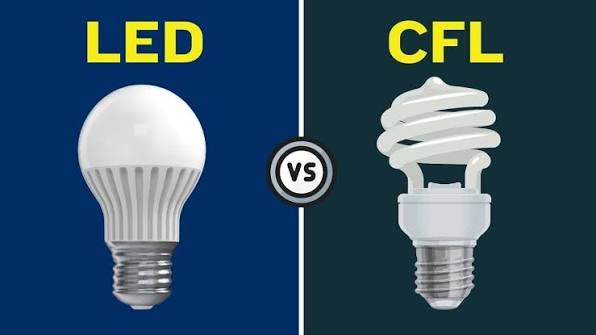
Why LED Genuinely Consumes Considerably Less Electricity
This is genuinely LED’s most significant, measurable advantage. LEDs are up to 80% more efficient than incandescent lighting, and when compared specifically against CFL, LEDs genuinely use 20 to 30% less power for equivalent brightness, some comparisons showing LEDs saving as much as 42% over CFL depending on the specific bulb generation being compared. This genuine efficiency gap translates directly into your monthly electricity bill, since lighting genuinely accounts for a meaningful share of most Indian households’ total power consumption.
The technical reason genuinely explains this gap clearly, LEDs use semiconductors to produce light directly, wasting minimal energy as heat, while CFLs create light by passing electricity through gas inside a tube, a process that’s genuinely less efficient at converting that electricity into usable brightness compared to LED’s more direct approach.
Why LED Bulbs Genuinely Last Considerably Longer
This is where the gap becomes genuinely dramatic rather than marginal. LED bulbs typically last 25,000 to 50,000 hours, compared to CFL’s 8,000 to 15,000 hours, meaning a single LED bulb genuinely outlasts multiple CFL replacements over the same period. This longevity gap genuinely matters practically too, fewer replacements mean less frequent trips to buy new bulbs, less hassle changing bulbs in hard-to-reach fixtures, and genuinely lower cumulative spending over the years despite LED’s higher individual purchase price.
For light fixtures in awkward locations, high ceilings, staircases, or exterior lighting where changing bulbs is genuinely inconvenient, this extended lifespan alone often justifies choosing LED regardless of the upfront cost difference, since you’re genuinely avoiding the hassle of frequent replacement for years at a time.
Why LED Genuinely Wins on Environmental and Health Safety
This is worth taking seriously rather than treating as a minor footnote. CFL bulbs contain trace amounts of mercury, a hazardous substance that poses genuine environmental and health risks if not disposed of properly, broken or discarded CFL tubes can genuinely contaminate soil and water sources if handled carelessly. LEDs, by contrast, are completely mercury-free and designed using recyclable materials, making them genuinely safer for both your household and the broader environment.
This distinction genuinely matters practically too, if a CFL bulb breaks in your home, you’re dealing with a mercury spill requiring careful cleanup, while a broken LED bulb genuinely poses no such toxic exposure risk, a real practical safety advantage that’s easy to overlook until it becomes genuinely relevant.
Understanding the Genuine Long-Term Cost Comparison
It’s genuinely worth acknowledging CFL’s one remaining advantage honestly, CFL bulbs are cheaper upfront, making them genuinely more budget-friendly for an immediate, one-time purchase. But this upfront savings genuinely disappears once you factor in the complete picture, LEDs may cost more initially, but their energy savings and longevity make them far more economical over the years, since a single LED can genuinely last five times longer than a CFL while consuming considerably less electricity throughout that entire lifespan.
This means the genuine total cost of ownership, purchase price plus electricity consumption plus replacement frequency over several years, consistently favours LED despite its higher sticker price, making the “cheaper” CFL option genuinely more expensive in practice once you account for how many CFL bulbs you’d need to buy and how much extra electricity they’d consume across that same timeframe.
Why Light Quality Genuinely Matters Too, Not Just Efficiency
Beyond pure cost and lifespan, LEDs genuinely provide bright, clear lighting with minimal heat generation, an important comfort factor in India’s already warm climate, where every additional heat source in a room genuinely adds to your cooling burden during summer months. CFLs, while considerably better than old incandescent bulbs, genuinely generate more heat and can take a moment to reach full brightness after switching on, a small but genuinely noticeable difference compared to LED’s instant, full-brightness illumination the moment you flip the switch.
Making the Genuinely Practical Decision for Your Home
Given how decisively LED wins across efficiency, lifespan, safety, and genuine long-term cost, the practical recommendation genuinely isn’t complicated, replace your remaining CFL bulbs with LED as they burn out, rather than stockpiling more CFL replacements. For any new construction or renovation, choosing LED from the start genuinely avoids this transition altogether, letting you benefit from lower electricity bills and minimal maintenance from day one rather than paying the CFL-to-LED switching cost twice.
Frequently Asked Questions
Q1. Is it genuinely worth replacing working CFL bulbs with LED before they burn out?
For most households, waiting until CFL bulbs naturally burn out before replacing them with LED genuinely makes sense financially, though for high-traffic areas or where electricity costs matter considerably, replacing even functional CFL bulbs early can genuinely pay for itself faster given LED’s substantial ongoing energy savings.
Q2. Why do LED bulbs genuinely cost more upfront than CFL bulbs?
LED’s more sophisticated semiconductor-based technology genuinely costs more to manufacture than CFL’s simpler gas-tube design, though this higher upfront cost genuinely gets recovered through LED’s considerably lower electricity consumption and dramatically longer lifespan over just a couple of years of use.
Q3. Is it genuinely dangerous if a CFL bulb breaks in my home?
It requires genuinely careful handling rather than panic, CFL bulbs contain trace mercury, so broken bulbs should be cleaned up carefully following proper disposal guidelines rather than simply swept up normally, a risk that LED bulbs genuinely eliminate entirely since they contain no mercury at all.
Q4. Can I genuinely use LED bulbs in fixtures originally designed for CFL bulbs?
Yes, genuinely, most LED bulbs work perfectly fine in standard CFL sockets as long as the wattage and base style match, making the switch from CFL to LED genuinely straightforward without needing to replace your existing light fixtures.