
Building a gaming PC in India today genuinely means confronting import duties, GPU shortages, and prices sitting well above international MSRP, making this decision genuinely more consequential than in markets where graphics cards remain readily available. Whether you’re building your first serious gaming rig or upgrading an ageing setup, choosing between NVIDIA and AMD genuinely determines not just your frame rates today, but how your investment holds up over the next three to four years of gaming you’ll actually do on it.
Here’s why this comparison genuinely deserves nuanced treatment rather than simply picking the more popular brand: NVIDIA and AMD genuinely excel at different things, ray tracing quality versus raw rasterisation value, and the “better” GPU genuinely depends on exactly what games you play, what resolution you target, and whether features like ray tracing actually matter to your specific gaming habits. Understanding these genuine trade-offs helps you spend your rupees on performance you’ll actually notice, rather than paying for capabilities you’ll never turn on.
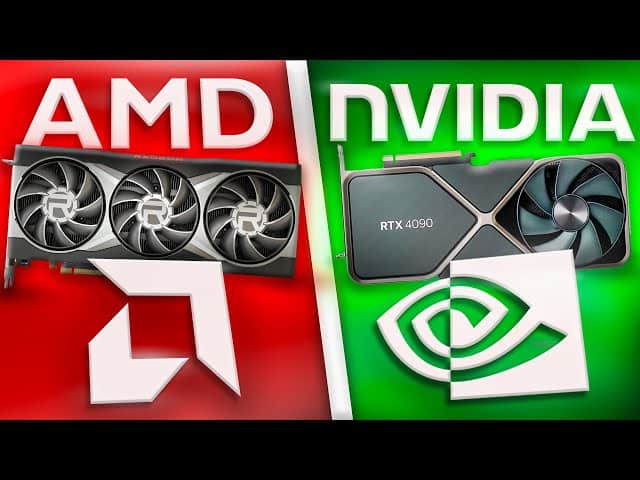
Why NVIDIA Genuinely Dominates Ray Tracing Performance
This is genuinely NVIDIA’s strongest, most consistent advantage, and it isn’t close. NVIDIA maintains roughly 30 to 40% faster performance in ray-traced games compared to similarly priced AMD cards, even accounting for AMD’s recent architectural improvements. This gap genuinely matters for story-driven, visually immersive titles like Cyberpunk 2077, Metro Exodus, or Alan Wake 2, where ray tracing creates dramatically more realistic lighting, shadows, and reflections, precisely the visual showcase moments these games are specifically built to highlight.
NVIDIA’s DLSS 4 upscaling technology genuinely compounds this advantage too, using transformer-based upscaling and multi-frame generation to make these demanding ray-traced games playable at high resolutions without sacrificing smooth frame rates, a genuine one-two punch that AMD’s FSR 4, while improved considerably, still hasn’t fully matched.
Why AMD Genuinely Wins on Value-Per-Frame in Regular Gaming
It’s genuinely worth being fair to AMD here, since it clearly wins on a specific, important measure most gamers actually prioritise. AMD usually wins on raw rasterisation performance per dollar, delivering higher standard frame rates in non-ray-traced games at the same price point compared to equivalent NVIDIA cards. For pure budget gaming at 1080p specifically, AMD genuinely represents the smarter buy in most price tiers, and mid-range cards like the RX 9070 XT genuinely deliver strong value for gamers who don’t specifically prioritise ray tracing’s visual showcase over raw frame rate performance.
This value advantage genuinely extends into memory capacity too, AMD’s cards frequently offer considerably more VRAM than NVIDIA’s equivalent price-tier options, sometimes 16GB compared to NVIDIA’s 12GB, a genuine longevity advantage worth considering given how demanding newer games are becoming with memory requirements.
Why Honest Self-Assessment About Ray Tracing Genuinely Matters Before You Overspend
This is genuinely worth internalising before assuming ray tracing automatically justifies NVIDIA’s premium. Ray tracing looks genuinely gorgeous in screenshots, but in actual motion during gameplay, the visual difference is subtle in many games, and the performance cost typically runs 30 to 50% of your frame rate. Unless you’re genuinely playing specific ray-tracing showcase titles, you might genuinely never enable this feature at all, making paying a premium specifically for ray tracing performance you’ll rarely use genuinely wasted money for many gamers.
This honest assessment genuinely matters because it reframes the entire decision, rather than assuming NVIDIA’s ray tracing advantage automatically makes it the better choice, ask yourself honestly whether you actually play the specific game genres where ray tracing genuinely transforms the visual experience, or whether you’d rather have AMD’s stronger raw frame rate for the competitive, fast-paced games you actually spend most of your time playing.
Why Competitive Esports Gamers Genuinely Don’t Need to Prioritise Ray Tracing at All
This matters considerably if your gaming diet consists primarily of competitive titles. In games like CS2, Valorant, and Fortnite, both NVIDIA and AMD cards genuinely deliver 300-plus frames per second, essentially identical performance between the two brands. Esports shooters genuinely care more about steady rasterisation performance and consistent frame pacing than ray tracing or upscaling technology, meaning if this genuinely describes your primary gaming habit, the ray tracing debate becomes largely irrelevant, and you should genuinely prioritise whichever brand offers stronger value at your specific budget instead.
Why Content Creation and AI Work Genuinely Tilts Firmly Toward NVIDIA
This deserves specific attention if you’re not purely gaming on this machine. If you also do video editing, 3D rendering, or AI-related work, NVIDIA’s CUDA ecosystem genuinely remains years ahead of AMD’s ROCm platform, with mature support across Premiere Pro, DaVinci Resolve, Blender, and virtually every major AI framework. For anyone building a genuinely dual-purpose machine, gaming alongside content creation or AI experimentation, this software ecosystem advantage genuinely makes NVIDIA the safer, more capable choice regardless of the pure gaming price comparison.
Making the Genuinely Right Choice Based on Your Actual Gaming Habits
If you’re building purely for competitive esports or budget-conscious 1080p and 1440p gaming without heavy ray tracing emphasis, AMD’s superior value-per-frame genuinely makes it the smarter buy for maximising your rupees. If you play story-driven, visually immersive AAA titles where ray tracing genuinely transforms the experience, or you need CUDA support for creative and AI work alongside gaming, NVIDIA’s premium genuinely justifies itself for your specific use case.
Frequently Asked Questions
Q1. Is NVIDIA genuinely worth the extra cost if I mainly play competitive games like Valorant or CS2?
Probably not, in competitive esports titles, both NVIDIA and AMD cards genuinely deliver essentially identical high frame rates, meaning ray tracing and DLSS advantages that justify NVIDIA’s premium in AAA single-player games genuinely don’t apply to your specific gaming habits.
Q2. Should I prioritise more VRAM or better ray tracing performance when choosing between similarly priced cards?
This genuinely depends on your game preferences, if you play visually intensive AAA titles with ray tracing enabled, NVIDIA’s stronger performance genuinely matters more, but if you want long-term game compatibility and play a variety of demanding titles, AMD’s typically higher VRAM at the same price genuinely offers better longevity.
Q3. Is it genuinely wasteful to pay extra for ray tracing capability I might never actually use?
Yes, genuinely, if you’re honest that you rarely play ray-tracing showcase titles, paying NVIDIA’s premium specifically for this feature is genuinely money better spent on a stronger overall card from either brand or invested into a better monitor instead.
Q4. Does AMD’s driver reliability genuinely still lag behind NVIDIA the way it used to?
Not really anymore, genuinely, driver reliability between the two brands has become close enough in 2026 that the old NVIDIA-versus-AMD reputation gap no longer meaningfully drives purchasing decisions, making this a considerably less important factor than it once was.