
Walk into any laptop shop in Nehru Place or browse Amazon India’s laptop section, and you’ll genuinely hit this exact fork in the road almost immediately, nearly every model comes in either an Intel or AMD variant, often at strikingly similar prices with strikingly similar specs on paper. This decision genuinely used to matter enormously, Intel dominated the market for years while AMD played catch-up, but that gap has genuinely closed so dramatically by 2026 that choosing wrong has become genuinely difficult to do.
Here’s why this comparison genuinely still deserves careful thought despite that narrowing gap: Intel and AMD genuinely approach chip design through different philosophies, one uses a hybrid mix of performance and efficiency cores, the other sticks with uniform, equally powerful cores throughout, and these genuine architectural differences translate into real, measurable strengths for specific workloads even if the overall gap has narrowed considerably. Understanding exactly where each processor genuinely excels helps you choose based on how you’ll actually use your laptop or desktop, rather than simply picking whichever brand feels more familiar.
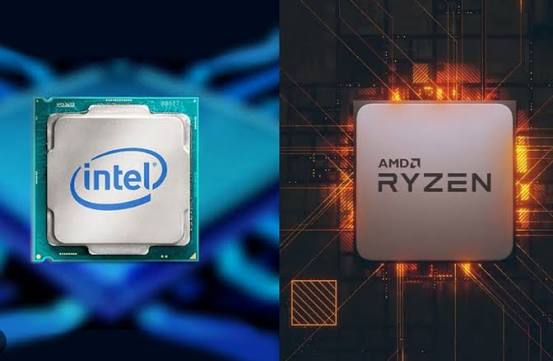
Why AMD Genuinely Wins on Multi-Core Performance and Efficiency
This is genuinely AMD’s most consistent advantage across recent generations. AMD usually has the edge in performance per watt, especially in gaming, rendering, and heavy multi-core workloads, and AMD processors typically deliver excellent multi-threaded performance, meaning tasks that utilise many CPU cores simultaneously, video rendering, 3D work, code compilation, genuinely run faster on AMD systems compared to equivalent Intel chips.
This efficiency advantage genuinely stems from AMD’s architectural approach too, all cores in AMD’s Ryzen lineup are full-power, identical cores without Intel’s more complex performance-core and efficiency-core split, a simpler design that genuinely delivers consistent, predictable performance across every task without needing the operating system to intelligently route work between different core types.
Why Intel Genuinely Remains Strong for Everyday Responsiveness
It’s genuinely worth being fair to Intel here, since it hasn’t simply fallen behind across the board. Intel remains a smart choice for business desktops, Adobe-heavy creative workflows, responsive everyday performance, and productivity tasks, and Intel laptops slightly outperform in light, sequential tasks specifically. This genuinely matters for typical office work, document editing, web browsing, video calls, where Intel’s hybrid architecture, combining performance cores for demanding moments with efficiency cores handling background tasks, genuinely keeps everyday use feeling snappy and responsive.
Why the Real-World Performance Gap Has Genuinely Narrowed to Near-Nothing
This is genuinely the most important context for most buyers to understand before agonising over this decision. When comparing same-tier processors, an Intel Core i5 against an equivalent AMD Ryzen 5, the performance difference is typically just 2 to 5%, a gap genuinely small enough that you won’t feel it in everyday use regardless of which you choose. This means for the vast majority of buyers, the processor brand matters considerably less than the specific tier you’re purchasing, an i7 will genuinely outperform an i5 regardless of brand, but an i5 versus an equivalent Ryzen 5 genuinely comes down to marginal differences rather than one being clearly, decisively superior.
Why Gaming Performance Genuinely Depends on the Specific Game
This distinction matters considerably for anyone building specifically for gaming. AMD’s X3D processors with 3D V-Cache technology continue to dominate CPU-bound gaming scenarios specifically, and if your goal is maximum frame rate in competitive titles like Valorant, CS2, or Fortnite, AMD usually has the genuine edge. That said, for high-resolution gaming where the graphics card matters more than raw CPU speed, you can confidently build on either platform without meaningfully sacrificing performance, since at higher resolutions, the GPU genuinely becomes the primary bottleneck rather than the CPU choice between Intel and AMD.
Why Battery Life Genuinely Comes Down to Overall Laptop Design More Than CPU Brand
This is worth understanding honestly rather than assuming either brand automatically wins on battery. Battery life depends more on the laptop’s design than on the CPU’s logo, and while AMD has traditionally held a slight one to two hour battery advantage in some comparisons, this margin is genuinely shrinking as Intel’s newer efficiency cores improve considerably. In well-tuned systems, both AMD and Intel platforms can genuinely last all day on light tasks, meaning the specific laptop’s battery capacity, display, and overall engineering matter considerably more than which processor brand sits inside it.
Why AI Features Genuinely Matter More Than Ever in 2026 Laptop Purchases
This is a genuinely newer consideration worth factoring into your decision. Windows now integrates AI deeply into the system, live captions, real-time transcription, background blur during video calls, and intelligent search all rely on your processor’s dedicated AI processing unit, or NPU. Both Intel’s Core Ultra chips and AMD’s Ryzen AI processors now deliver genuinely competitive NPU performance for these Copilot+ PC features, meaning if you’re buying a laptop specifically for its future-ready AI capabilities, both brands genuinely offer solid options rather than one clearly dominating this emerging category.
Making the Genuinely Practical Choice for Your Specific Needs
For 95% of buyers, the practical recommendation genuinely comes down to simply choosing whichever option is cheaper at the specific tier you’re considering, since the performance difference is genuinely too small to notice in typical daily use. If you’re specifically building for heavy multi-core workloads, video editing, 3D rendering, or competitive CPU-bound gaming, AMD’s architecture genuinely gives it a measurable edge worth prioritising. If you’re focused on general productivity, business use, or Adobe-heavy creative work where Intel’s ecosystem has historically been well-optimised, Intel genuinely remains a smart, reliable choice without any real downside.
Frequently Asked Questions
Q1. Is AMD genuinely better than Intel for gaming laptops in 2026?
For CPU-bound competitive games specifically, AMD’s X3D processors genuinely offer better frame rates, though for high-resolution gaming where the graphics card matters more than the CPU, both brands perform comparably well, making your choice depend on your specific gaming priorities.
Q2. Should I worry about choosing the wrong brand when buying a laptop under a specific budget?
Genuinely not much, when comparing similarly-tiered processors, the performance gap between Intel and AMD is typically just 2 to 5%, small enough that most users won’t notice any real difference in everyday use, making the specific tier matter more than the brand.
Q3. Does AMD genuinely offer better battery life than Intel laptops?
AMD has traditionally held a slight advantage, sometimes one to two hours longer, though this margin is genuinely shrinking as Intel’s efficiency cores improve, and overall laptop design, battery capacity, and display efficiency matter considerably more than CPU brand alone.
Q4. Which processor brand genuinely handles AI features better in 2026 laptops?
Both Intel’s Core Ultra chips and AMD’s Ryzen AI processors now deliver genuinely competitive NPU performance for AI-enhanced features like live captions and background blur, meaning neither brand clearly dominates this specific category as of 2026.