
Standing in a Croma or Reliance Digital store in 2026, comparing the iPhone 17 against Samsung’s Galaxy S26 side by side, you’ll genuinely notice something that surprises many buyers, the Galaxy S26 actually costs slightly more than Apple’s flagship this time around, a genuine reversal of the pricing story most people walk in expecting. Choosing between these two genuinely isn’t just about which brand you’re loyal to, it’s about understanding what each phone actually delivers for your specific ₹80,000-plus investment.
Here’s why this comparison genuinely deserves careful attention rather than picking based purely on brand preference: both phones share nearly identical 6.3-inch displays and similar physical footprints, yet they diverge meaningfully in camera setup, battery capacity, performance benchmarks, and software ecosystem. Understanding exactly where each phone genuinely wins helps you decide which flagship actually suits how you’ll use your phone daily, rather than simply following whichever brand you’ve always bought.
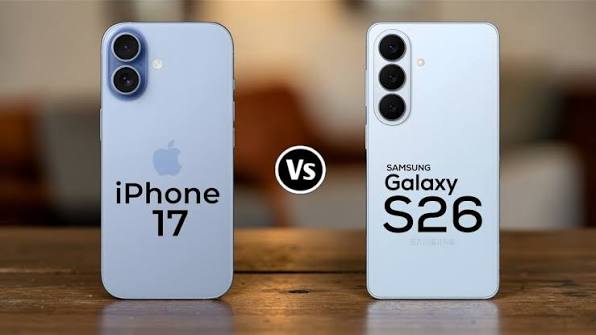
Why iPhone 17 Genuinely Wins on Price in India
This is genuinely worth stating clearly upfront since it surprises many buyers. The iPhone 17 starts at ₹82,900 for 256GB storage, sometimes dropping to around ₹79,900 with festival offers on platforms like Flipkart, while the Galaxy S26 starts at ₹87,999 for its 12GB RAM plus 256GB configuration. This means iPhone 17 genuinely undercuts Samsung’s flagship by roughly ₹5,000 to ₹8,000 at entry level, a genuine reversal from the traditional narrative of iPhone always sitting at the premium end compared to Android flagships.
This pricing shift genuinely matters for anyone assuming Samsung would automatically be the more affordable choice, the extra cost for the Galaxy S26 does buy you tangible benefits though, considerably more RAM and an additional camera lens, meaning you’re genuinely paying for real, measurable hardware differences rather than just brand premium.
Why Samsung Genuinely Wins on Raw Performance Benchmarks
This is worth understanding in concrete terms. On Geekbench multi-core testing, the Galaxy S26 genuinely scores higher, 11,249 compared to iPhone 17’s 9,327, suggesting stronger multi-threaded performance for tasks like heavy multitasking or demanding background processes. The Galaxy S26 also genuinely offers more RAM, 12GB compared to the iPhone 17’s 8GB, which translates practically into smoother handling of multiple simultaneously running apps and browser tabs.
That said, raw benchmark numbers don’t always translate directly into real-world experience, iOS and Android manage memory and background processes quite differently, meaning the iPhone’s lower RAM figure doesn’t necessarily mean a noticeably worse everyday experience, Apple’s tighter software-hardware integration has historically compensated for lower raw specs compared to Android’s typically higher numbers.
Why Camera Setup Genuinely Differs in Meaningful Ways
This matters considerably depending on your specific photography habits. The Galaxy S26 features a triple rear camera system offering genuinely more versatility, including zoom capability the iPhone 17’s dual camera setup doesn’t match, while also edging ahead on raw rear camera resolution, 50MP versus the iPhone’s 48MP. The iPhone 17, however, genuinely wins on front camera resolution, 18MP compared to Samsung’s 12MP, making it the stronger choice specifically for selfies and video calls.
This genuine split means your decision here should reflect your actual photography priorities, if you frequently shoot distant subjects or want genuine zoom flexibility, Samsung’s triple camera setup delivers real advantage, while frequent selfie-takers or video callers might genuinely prefer the iPhone’s stronger front camera specification instead.
Why Battery Life Genuinely Favours Samsung
This is a straightforward, measurable difference worth knowing. The Galaxy S26 packs a 4,300 mAh battery compared to the iPhone 17’s considerably smaller 3,692 mAh capacity, giving Samsung’s flagship a genuine edge in raw battery capacity that typically translates into longer screen-on time for heavy daily users. For anyone who’s frequently frustrated by their phone running low on battery by mid-afternoon, this genuine capacity difference matters more than almost any other single spec on this list.
Why Display Quality Genuinely Comes Down to Personal Preference
Both phones share an identical 6.3-inch screen size, but Samsung’s Dynamic AMOLED 2x display genuinely edges out Apple’s Super Retina XDR OLED according to several comparison reviews, though both deliver genuinely excellent brightness and colour accuracy that most users would find hard to distinguish in everyday use without deliberately comparing them side by side. This distinction genuinely matters more to display enthusiasts specifically seeking marginal improvements than to typical buyers who’ll find both screens genuinely satisfying for daily browsing, video watching, and photo viewing.
Why Your Ecosystem Investment Genuinely Should Guide the Final Decision
Beyond pure specifications, this decision genuinely comes down to which ecosystem you’re already invested in, or want to invest in going forward. If you own a MacBook, iPad, or AirPods, the iPhone 17’s tight integration with these devices genuinely delivers convenience Samsung simply cannot replicate, seamless file sharing, unified notifications, and consistent design language across your entire device collection. If you value Android’s customisation freedom, prefer Samsung’s broader software features, or already use Samsung’s Galaxy ecosystem including a Galaxy Watch or Galaxy Buds, the S26 genuinely extends that same integrated convenience within Samsung’s own ecosystem instead.
Frequently Asked Questions
Q1. Is the iPhone 17 genuinely cheaper than the Samsung Galaxy S26 in India right now?
Yes, genuinely, the iPhone 17 starts at ₹82,900 compared to the Galaxy S26’s ₹87,999, a roughly ₹5,000 to ₹8,000 gap in Apple’s favour at entry level, a reversal from the traditional assumption that iPhone always costs more than equivalent Samsung flagships.
Q2. Which phone genuinely has better battery life between the two?
The Galaxy S26 genuinely wins here, its 4,300 mAh battery capacity considerably exceeds the iPhone 17’s 3,692 mAh, translating into longer battery life for most users during typical daily usage patterns.
Q3. Should I choose the phone with the better camera specs, or does ecosystem matter more?
This genuinely depends on your priorities, if you’re heavily invested in Apple’s ecosystem through a MacBook or iPad, or Samsung’s through a Galaxy Watch, that integration convenience often matters more for daily satisfaction than marginal camera or benchmark differences between the two flagships.
Q4. Does the Galaxy S26’s higher RAM genuinely make it noticeably faster than the iPhone 17 in everyday use?
Not necessarily as dramatically as the benchmark numbers suggest, iOS and Android manage memory quite differently, meaning the iPhone’s lower RAM figure doesn’t automatically translate into a noticeably slower everyday experience given Apple’s tightly optimised software-hardware integration.