
Look up at any beautifully designed Indian living room, and you’ll spot a false ceiling doing quiet, essential work, hiding ugly electrical wiring, improving lighting distribution, and adding genuine visual depth to an otherwise flat, boring space. But ask two different contractors whether you should go with gypsum or POP for that ceiling, and you’ll genuinely get two confidently different answers, each swearing by their preferred material. Understanding what actually separates these two options genuinely matters before you commit, since this decision affects your installation timeline, your design possibilities, and your final finish quality.
Here’s why getting this genuinely right matters beyond just picking whatever your contractor happens to prefer working with: gypsum and POP come from fundamentally different manufacturing processes, one is a standardised, factory-made board, the other is a wet paste shaped by hand on-site. This difference genuinely explains everything else, cost, installation speed, design flexibility, and how smooth your final ceiling actually looks.
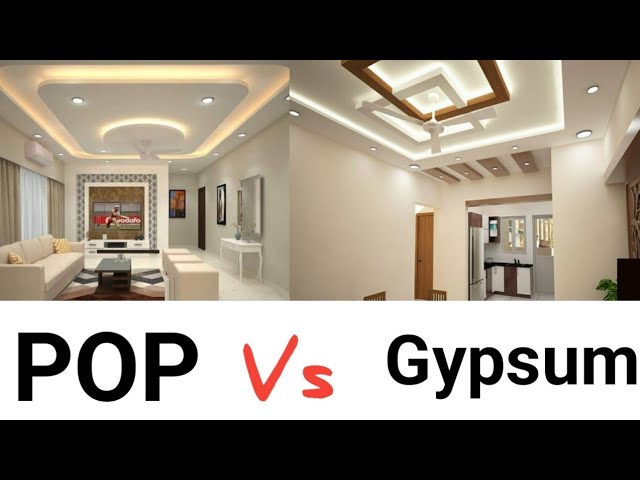
Why Their Manufacturing Process Genuinely Explains Every Other Difference
This distinction matters enormously and genuinely underlies the entire comparison. Gypsum false ceilings are made from standardised drywall sheets, prefabricated boards manufactured to consistent quality and thickness, then installed onto a metal frame. POP, or Plaster of Paris, is genuinely a white powder made from heated, dehydrated gypsum that gets mixed with water on-site to form a paste, then applied directly over a framework of wooden battens or metal channels, letting artisans shape it into custom curves and decorative patterns as they work.
This genuine difference in process, factory-standardised board versus hand-applied wet paste, explains why gypsum installs faster and finishes more consistently, while POP genuinely offers artisans considerably more creative freedom to sculpt intricate, one-of-a-kind decorative elements directly on your ceiling.
Why Installation Speed Genuinely Favours Gypsum Considerably
This gap is genuinely significant and worth factoring into your renovation timeline. Gypsum installation typically takes 2 to 4 days for a standard room, while POP is genuinely the slowest false ceiling option available, often taking 7 to 10 days due to the wet application process and the curing time required before the surface is ready for painting. For anyone renovating a home they’re currently living in, this timeline difference genuinely matters, gypsum’s prefabricated boards simply get mounted and joined, while POP requires the paste to be applied, shaped, and then genuinely left to cure properly before any further work can proceed.
This installation speed also genuinely translates into cost predictability, gypsum’s standardised process makes labour estimation considerably more straightforward, while POP’s artisan-dependent, weather-sensitive curing process can genuinely introduce more variability into your final timeline and budget.
Why POP Genuinely Wins for Intricate, Decorative Designs
This is where POP genuinely earns its enduring popularity despite gypsum’s modern efficiency advantages. Because POP is applied as a wet paste directly onto the ceiling framework, skilled artisans can genuinely shape it into custom curves, ornate cornices, and elaborate patterns during application itself, design possibilities that gypsum’s rigid, factory-made boards simply cannot replicate with the same organic freedom. This is precisely why POP remains genuinely popular for traditional homes, heritage properties, and living rooms where homeowners want an elaborate, decorative statement ceiling.
POP’s continued popularity in tier-2 and tier-3 Indian cities specifically reflects this genuine advantage too, these markets often have skilled traditional artisans readily available who can execute intricate POP designs that a purely gypsum-based approach genuinely wouldn’t achieve as convincingly.
Why Gypsum Genuinely Delivers a Smoother, More Consistent Finish
This is genuinely where gypsum pulls ahead for homeowners prioritising clean, modern aesthetics over ornate decoration. Gypsum boards arrive factory-manufactured to consistent quality, resulting in a genuinely smoother, more uniform finish across the entire ceiling surface, without the minor inconsistencies that hand-applied wet paste can sometimes introduce. This makes gypsum genuinely the preferred choice for modern residential and commercial spaces specifically, where clean lines and contemporary design language matter more than intricate, traditional decorative work.
Gypsum’s standardised manufacturing also genuinely means more predictable long-term performance, since every board comes from the same consistent production process, reducing the risk of the uneven curing or minor structural inconsistencies that can occasionally occur with POP’s more artisan-dependent, on-site application.
Understanding the Genuine Cost Comparison
Pricing genuinely varies somewhat depending on your specific contractor and city, but the general pattern across most current estimates shows gypsum and POP sitting in a genuinely similar overall price range, roughly ₹60 to ₹175 per square foot for either material depending on design complexity, though some sources note gypsum running marginally higher given its material cost, while others show POP costing more once you factor in labour-intensive decorative work.
What genuinely matters more than a small per-square-foot difference is design complexity, a basic flat ceiling in either material stays genuinely affordable, while ornate POP cornices or elaborate multi-level gypsum designs with cove lighting genuinely add 20% to 40% to your total cost regardless of which base material you’ve chosen.
Why PVC Genuinely Deserves Consideration for Bathrooms Specifically
Worth mentioning here since it often comes up alongside this comparison, neither gypsum nor POP is genuinely ideal for bathrooms or consistently humid spaces. PVC false ceilings, being completely waterproof and moisture-resistant, genuinely handle bathroom conditions without warping, rotting, or developing mould the way standard gypsum or POP would in constant humidity. If you’re genuinely planning false ceiling work specifically for a bathroom, this third option deserves consideration over either of the two materials being compared here.
Frequently Asked Questions
Q1. Which false ceiling material genuinely installs faster, gypsum or POP?
Gypsum installs considerably faster, typically 2 to 4 days for a standard room, while POP genuinely takes 7 to 10 days due to its wet application process and required curing time before painting can begin.
Q2. Is POP genuinely still worth choosing given how much longer it takes to install than gypsum?
Yes, genuinely, if you specifically want intricate, ornate decorative designs, cornices, curves, custom patterns, POP’s hand-shaped, wet-paste application offers creative flexibility that gypsum’s factory-made boards simply cannot replicate, making the longer installation time a worthwhile trade-off for that specific aesthetic.
Q3. Does gypsum genuinely look less impressive than POP for a living room ceiling design?
Not necessarily, gypsum delivers a genuinely smooth, clean, modern finish well-suited to contemporary design preferences, and while it doesn’t offer POP’s intricate hand-shaped ornamentation, gypsum can still incorporate cove lighting and multi-level designs that look genuinely impressive within a more minimalist aesthetic.
Q4. Should I use gypsum or POP for a bathroom false ceiling?
Neither is genuinely ideal for bathrooms, ordinary gypsum and POP can warp or develop mould in constant humidity, PVC false ceilings, being fully waterproof, are the more sensible choice specifically for bathroom applications instead.