
Somewhere in a Mumbai kitchen right now, a wardrobe shutter has genuinely started swelling and warping just two monsoons after installation, not because the design was flawed, but because someone chose the wrong core material for a genuinely humid, moisture-heavy environment. This exact mistake plays out across Indian homes constantly, and understanding the fundamental difference between MDF and plywood before your furniture gets built genuinely saves you from watching an expensive wardrobe or kitchen cabinet slowly deteriorate within just a few years.
Here’s why this comparison genuinely matters beyond simply picking whichever costs less: MDF and plywood aren’t interchangeable materials serving the same purpose equally well, they’re genuinely built through entirely different manufacturing processes that make one considerably better suited to India’s humid, monsoon-heavy climate, while the other excels specifically at delivering smooth, paint-ready surfaces for decorative work. Choosing correctly for each specific piece of furniture, rather than defaulting to one material throughout your entire home, genuinely determines whether your furniture lasts years or requires premature replacement.
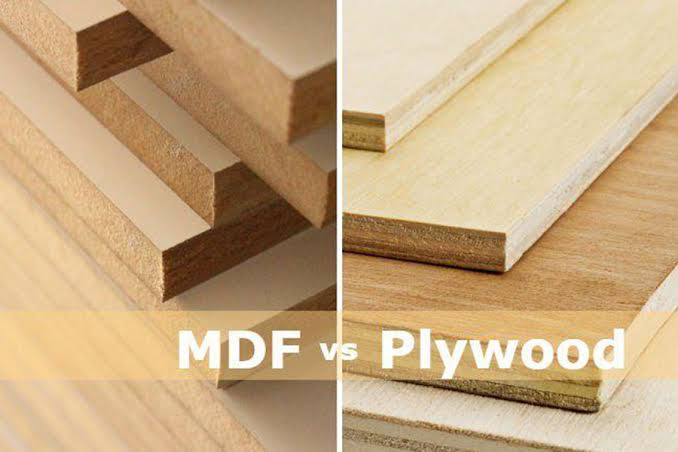
Why Their Manufacturing Process Genuinely Explains Everything Else
This distinction matters before comparing anything else. Plywood is made by gluing together multiple thin layers of wood veneers, each layer oriented perpendicular to the next, giving it genuinely superior strength, dimensional stability, and load-bearing capacity through this cross-grain construction. MDF, Medium Density Fibreboard, is made by putting wood fibres under intense pressure mixed with glue, creating a genuinely smooth, consistent surface throughout, but without plywood’s structural cross-layering that provides its superior strength.
This fundamental construction difference genuinely explains why plywood handles weight-bearing furniture and moisture exposure considerably better, its layered structure resists bending and cracking, while MDF’s uniform fibre composition delivers that flawless, paint-ready surface perfect for decorative work but genuinely lacks the structural resilience plywood’s cross-grain layering provides.
Why Plywood Genuinely Wins for Moisture-Prone Areas
This matters enormously given India’s genuinely humid climate and intense monsoon seasons. Standard MDF absorbs water quickly and swells, if not properly sealed, it soaks up water and other liquids like a sponge, a genuinely serious concern during Indian monsoon season when humidity levels spike dramatically, and even in air-conditioned rooms, condensation near windows can affect unsealed MDF edges over time.
Plywood, particularly BWR, boiling water resistant, or BWP, boiling waterproof, grades, handles damp conditions considerably better than MDF ever could, making it genuinely the right choice for kitchens where haldi, water, and steam are regular daily presences, and for bathrooms or any area facing consistent moisture exposure. This genuine moisture vulnerability is precisely why experienced interior designers consistently recommend against using MDF in wet areas entirely, regardless of how appealing its lower price might seem upfront.
Why MDF Genuinely Wins for Smooth Finishes and Decorative Work
It’s genuinely worth being fair to MDF here, since plywood doesn’t win every single measure. MDF’s super-smooth surface absorbs paint beautifully, giving that polished, showroom-quality finish you see in modern modular homes, a genuine advantage for anyone wanting flawless painted surfaces or intricate CNC-routed decorative designs that plywood’s visible grain and layered structure simply can’t replicate as convincingly. This makes MDF genuinely the smarter choice for feature walls, decorative panelling, and furniture shutters where visual appearance matters more than raw structural strength.
Understanding the Genuine Cost Comparison
MDF genuinely costs less than plywood in most Indian markets, typically ₹45 to ₹85 per square foot depending on thickness and grade, while plywood runs considerably higher, ₹75 to ₹145 per square foot for commercial to premium grades. This cost gap genuinely reflects their different manufacturing complexity, MDF’s simpler production process from wood fibres makes it genuinely cheaper to manufacture at scale compared to plywood’s more complex, multi-layer veneer construction using higher quality raw materials.
That said, this lower upfront cost genuinely comes with a shorter lifespan trade-off worth factoring into your total cost calculation, MDF typically lasts 7 to 10 years in Indian climate conditions, while quality plywood genuinely lasts considerably longer, 15 to 25 years, meaning plywood’s higher initial cost often delivers better long-term value specifically for furniture you’re not planning to replace anytime soon.
Why Weight-Bearing Furniture Genuinely Demands Plywood
This is genuinely non-negotiable for structural applications. Plywood is generally stronger than MDF, its layered construction gives it considerably more resistance to bending and cracking, making it genuinely ideal for furniture that needs to support weight, bookshelves, bed frames, dining tables, and wardrobe carcasses that bear the weight of stored items daily. Using MDF for these genuinely weight-bearing applications risks sagging and structural failure over time, precisely the kind of gradual deterioration that catches homeowners off guard years after installation when the damage has already progressed significantly.
Why Combining Both Materials Genuinely Makes the Smartest Approach
Rather than choosing one material exclusively across your entire home, the smartest, most experienced approach genuinely uses both strategically within the same piece of furniture. For modular kitchen cabinets specifically, using plywood for the cabinet carcass, where structural strength and moisture resistance matter most, while choosing MDF for decorative shutters, where smooth, paint-ready surfaces matter more than raw strength, genuinely delivers optimal durability and aesthetics simultaneously. This combined approach genuinely reflects how most experienced Indian interior designers actually specify materials today, rather than forcing either material to handle every application equally well.
Frequently Asked Questions
Q1. Is MDF genuinely safe to use for kitchen cabinets in humid Indian conditions?
Generally not recommended for structural kitchen components, standard MDF swells when exposed to moisture common in kitchens, plywood, particularly BWR or BWP grades, is genuinely the better choice for cabinet carcasses, while MDF can work acceptably for decorative shutters if the kitchen has proper ventilation.
Q2. Why does plywood genuinely cost more than MDF despite both being engineered wood products?
Plywood’s manufacturing process is genuinely more complex, involving multiple cross-layered wood veneers bonded together using higher quality raw materials, compared to MDF’s simpler process of compressing wood fibres, explaining the meaningful price difference between the two materials.
Q3. Can I genuinely use MDF for my bed frame or dining table?
Not recommended for these specific applications, weight-bearing furniture like beds and dining tables genuinely benefit from plywood’s superior structural strength and resistance to bending, while MDF works better for furniture that won’t carry significant weight, like decorative panels or lightweight shelving.
Q4. Is it genuinely worth paying extra for BWP-grade plywood over standard commercial plywood?
Yes, genuinely, for kitchens, bathrooms, or any furniture facing regular moisture exposure, BWP’s superior water resistance justifies the extra cost through considerably longer lifespan and durability, though standard commercial plywood remains genuinely adequate for dry, low-moisture areas where the extra waterproofing isn’t necessary.