
Every Indian homeowner planning a new kitchen genuinely faces the same nagging uncertainty: hire the neighbourhood carpenter who’s built kitchens for half your building already, or splurge on a factory-made modular setup from a branded showroom promising sleek, machine-precise finishes. This decision genuinely feels bigger than it should, largely because most people compare only the upfront quote without genuinely understanding what happens to either kitchen over the following decade of daily use.
Here’s why this genuinely matters beyond just picking whichever costs less today: a factory-made kitchen typically costs 15 to 25% more upfront than an equivalent carpenter-made one, yet over a 15-year period, the actual total cost of ownership often works out lower for the factory-built option, once you account for repairs, replacements, and disruption that carpenter-made kitchens genuinely accumulate over time. Understanding this complete picture, rather than just the initial quote, genuinely determines which choice actually saves you money.
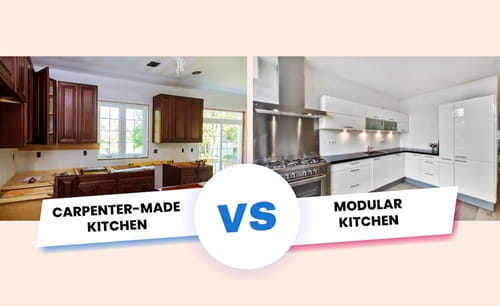
Why Their Manufacturing Process Genuinely Explains Everything Else
This distinction matters before comparing anything else. A modular kitchen consists of pre-fabricated cupboards and units manufactured in a controlled factory setting, using CNC machines achieving precision as tight as ±0.1mm, then assembled on-site based on your kitchen’s exact measurements. A carpenter-made kitchen is genuinely built entirely on-site, plywood and blockboard cut and assembled manually using hand tools, with the entire structure created by hand rather than machine.
This genuine difference in precision explains why modular kitchens deliver consistently tighter panel tolerances, better alignment, and cleaner edge banding than a site carpenter can typically achieve with a handsaw, machine-applied edge banding at temperatures around 200°C genuinely creates a more durable seal than what manual application achieves, directly affecting how well your kitchen resists moisture and daily wear over years of use.
Understanding the Genuine Cost Comparison
Pricing genuinely varies by source and region, but the consistent pattern shows carpenter-made kitchens starting lower, roughly ₹70,000 to ₹2.5 lakh depending on materials, while modular kitchens typically run ₹1.5 lakh to ₹5 lakh or more depending on size and finishes. This means carpenter-built kitchens genuinely cost 20 to 30% less at the entry level, a real, meaningful gap for anyone working within a tight renovation budget.
That said, this gap genuinely narrows considerably at the premium level, and importantly, one detailed 15-year comparison found that despite costing 15 to 25% more upfront, a factory-made kitchen actually saved ₹65,000 to ₹95,000 over its lifetime compared to carpenter-made, once repair costs, hardware replacement, and the shorter carpenter-kitchen lifespan got factored into the genuine total cost picture.
Why Installation Speed and Disruption Genuinely Favour Modular
This gap is genuinely significant for anyone living in the home during renovation. Factory-made modular kitchens typically install within 3 to 5 days, since most components arrive pre-manufactured and simply need assembly, while carpenter-made kitchens genuinely take 30 to 45 days, built entirely on-site with considerably more dust, noise, and daily disruption throughout the construction period. For households genuinely unable to move out during renovation, this timeline difference alone can make modular the more practical choice regardless of cost considerations.
Why Carpenter-Made Kitchens Genuinely Win on Customisation
It’s genuinely worth being fair to carpenter-made kitchens here, since modular doesn’t win every single measure. Carpenter-made kitchens offer complete flexibility in size, layout, and material selection, genuinely valuable for kitchens with unusual dimensions, very low ceiling height, odd angles, or awkward alcoves that no standard modular unit fits comfortably. A skilled carpenter using quality materials like 18mm BWR plywood and branded hardware can genuinely last 15 to 20 years and outperform a cheap, poorly-specified modular installation.
This customisation advantage genuinely matters most when your kitchen’s specific dimensions don’t align well with standard modular sizing, or when you’re working with a budget range where accessing genuinely good modular quality simply isn’t realistic.
Why the ₹1.5 Lakh Threshold Genuinely Matters for Your Decision
This is genuinely useful, practical guidance worth internalising. For kitchens with a budget above ₹1.5 lakh, the quality consistency of a factory-made modular unit is usually genuinely worth the premium, the tighter tolerances and reliable hardware integration justify the additional cost at this investment level. Below ₹1.5 lakh, a skilled local carpenter working with properly specified materials can genuinely provide equal or better value than a modular kitchen forced into that same lower budget, where corners inevitably get cut on hardware and panel quality to hit the price point.
Why Long-Term Upgradeability Genuinely Favours Modular
This is a genuinely underappreciated advantage worth knowing about. Because factory-made kitchens use standardised module sizes, you can genuinely add extra cabinets, upgrade hardware, or replace shutters later without disturbing the existing structure. Carpenter-made kitchens genuinely lack this flexibility, adding a new unit later often means reworking adjacent cabinets entirely, since the original construction wasn’t built around interchangeable, standardised components the way modular systems genuinely are.
What This Means for Your Actual Decision
Rather than treating this as purely modular versus carpenter, the smarter approach genuinely involves matching your choice to your specific budget tier and kitchen dimensions. If your kitchen has standard proportions and your budget comfortably exceeds ₹1.5 lakh, modular’s precision, warranty coverage, and long-term upgradeability genuinely justify the higher upfront cost. If you’re working with unusual dimensions or a tighter budget, a carefully specified carpenter-made kitchen, using quality plywood and branded hardware rather than the cheapest available materials, genuinely remains a smart, practical choice for Indian homes.
Frequently Asked Questions
Q1. Is a modular kitchen genuinely always more expensive than a carpenter-made one?
Generally yes upfront, modular kitchens typically cost 15 to 30% more initially, though over a 15-year period, factory-made kitchens can actually work out cheaper overall once you account for the repairs and replacements carpenter-made kitchens genuinely accumulate over time.
Q2. Which option genuinely suits a kitchen with unusual dimensions or awkward angles?
Carpenter-made kitchens genuinely handle unusual layouts better, since they’re built entirely custom on-site, while standard modular units are manufactured to fixed sizes that may not fit low ceilings, odd angles, or awkward alcoves as comfortably.
Q3. How much faster is modular kitchen installation genuinely compared to carpenter-made?
Considerably faster, modular kitchens typically install in 3 to 5 days since components arrive pre-manufactured, while carpenter-made kitchens genuinely take 30 to 45 days built entirely on-site, creating significantly more disruption if you’re living in the home during renovation.
Q4. At what budget level does modular genuinely become worth the extra cost over carpenter-made?
Above roughly ₹1.5 lakh, the quality consistency and precision of factory-made modular units genuinely justifies the premium, while below this threshold, a skilled carpenter using properly specified quality materials can often deliver equal or better value than a modular kitchen forced into that same lower budget.